
Foundational Black Americans: Lineage, History, and Who the Term Describes
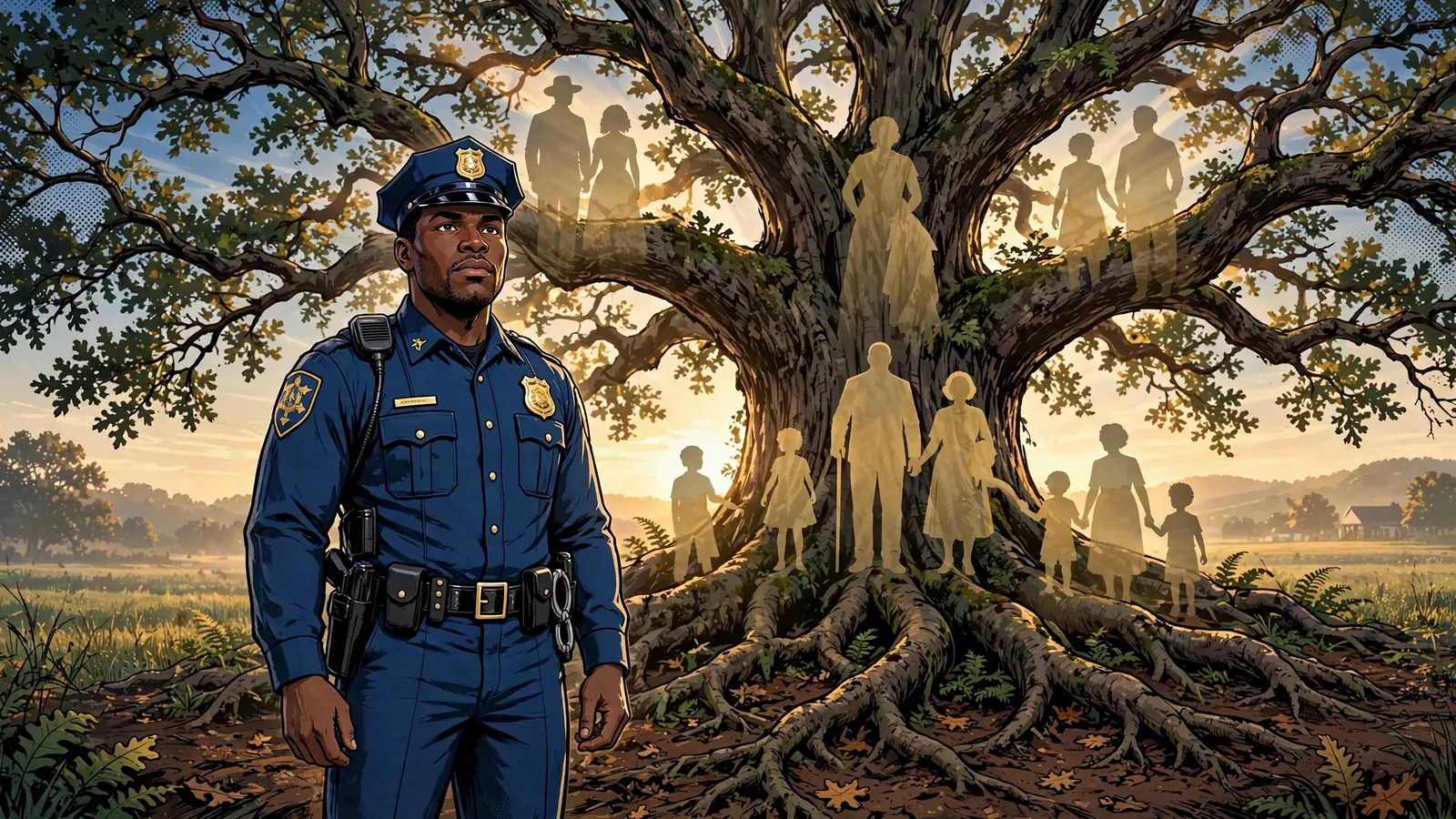
Start with the definition, because everything else hangs on it. Foundational Black Americans are Black Americans whose lineage runs through the people who were enslaved in the United States and emancipated here. That is the whole test. Not skin color. Not how somebody talks, dresses, or identifies. Lineage — whose bloodline was on this soil, in bondage and then in freedom, building this country across the centuries.
It is why the word "foundational" is doing real work in the name. The claim behind the term is simple: the descendants of American slavery are not guests in the United States and not newcomers to it. Their ancestors' labor is in the foundation — in the farms, ports, railroads, and cities — and their families' story runs unbroken from the slave ships and auction blocks through Emancipation, Reconstruction, Jim Crow, the Great Migration, and the civil rights era into the present day. A people formed here, in America, by that specific history. Their own people, with their own story.
It starts with lineage
Because the test is lineage, the term draws a line that older, broader labels do not. "Black" describes race. "Foundational Black American" describes a specific descent group: the children of the American freedmen. A Black immigrant who arrived from Kingston, Lagos, or Port-au-Prince in 1995 has a rich history of their own — but it is a different history, and under this framework neither they nor their children are Foundational Black Americans, no matter how long they live in the United States. The same applies in reverse: an FBA family that moves abroad does not stop being FBA. The line is carried in the bloodline, not the zip code.
People inside the framework sometimes note one refinement: a person with one FBA parent still carries the lineage through that parent. The point is descent from the enslaved population of the United States — traced, not assumed.
Who counts as a Foundational Black American?
Working from the definition, the picture looks like this:
- In: Black Americans who can trace at least one line of their family to people enslaved in the United States — the freedmen and their descendants.
- Out: Black immigrants to the United States and their descendants, whose lineages run through other countries' histories, however long the family has been here.
- The measure: ancestry, not appearance, culture, politics, or self-declaration.
How many people is that? The official FBA website puts the number at roughly 43 million Americans. That is the movement's own figure, offered here as theirs — the U.S. Census does not count "Foundational Black Americans" as a category, so there is no official government count to set against it.
The idea starts with Dr. Claud Anderson
The label is recent. The idea is not — and the idea has a name attached to it: Dr. Claud Anderson. Decades before anyone shortened this to three letters, Anderson was making the argument in print. In Black Labor, White Wealth (1994) and PowerNomics (2001), he described the descendants of American slavery as native Black Americans — an indigenous, non-immigrant people whose ancestors built this country under forced labor. That is the whole framework in one line: not immigrants, not one minority group among many, but a native people with a specific history and specific claims — including the case for reparations — that should not be blurred into a general racial category. Anderson himself has explained it plainly: when he says "native Blacks," he is talking about the descendants of U.S. slavery and Jim Crow — the very people this term names. The vocabulary caught up later. The lineage argument was already written.
And the roots run deeper than the textbooks usually bother to go. Black people were on this soil long before the transatlantic slave trade became the machine people picture. Juan Garrido, a free African conquistador, reached Florida with Ponce de León in 1513. In 1526 — ninety-three years before the famous 1619 date — Lucas Vázquez de Ayllón's colony at San Miguel de Gualdape brought enslaved Africans to the Carolina–Georgia coast; they rose up in one of the first recorded slave rebellions on this continent, and some of the escaped lived on among the Native peoples. Estevanico, an enslaved African from Morocco, walked the Southwest as an explorer and translator in the years after 1528. Free and enslaved, Black people were here at the very start of the colonial record — which is part of why the word "foundational" is not a boast. It is a date range.
Why it matters to this site
Why does a patrol site carry a lineage lesson? Because the officer at the center of Tether Patrol is one of them. His authority in the story does not come from a costume or a catchphrase; it comes from the line — generations of a people who survived everything this country threw at them and built a culture out of the surviving. When he says he is protecting his people online, that is the people he means. You can read how the line made the man in his origin story, and meet him properly in Meet Tether Patrol.
And if you came here because somebody is out there abusing that community behind a screen — a scam in the comments, a fake account wearing a trusted face — you already know the last step. Report a tether. The line held for four hundred years. It can hold a timeline too.
Sources and further reading (checked 22 October 2026): Wikipedia — Foundational Black Americans · Black Lens News — "Building Black Wealth: The Legacy of Dr. Claud Anderson's PowerNomics Explained" · Wikipedia — Slavery in the colonial history of the United States (Garrido, the 1526 Ayllón colony, Estevanico) · BallerAlert — "Foundational Black American Meaning: What FBA Really Stands For" · Black America Web — "Foundational Black Americans: Who Are They?"
Tags: Foundational Black Americans · Foundational Black American lineage · FBA meaning · Freedmen descendants