
How to Spot a Rental Listing Scam Before You Pay a Deposit
Listen to this article
Press play and take the patrol report with you.
Or listen in another language / choose a voice
Getting your device voices ready…
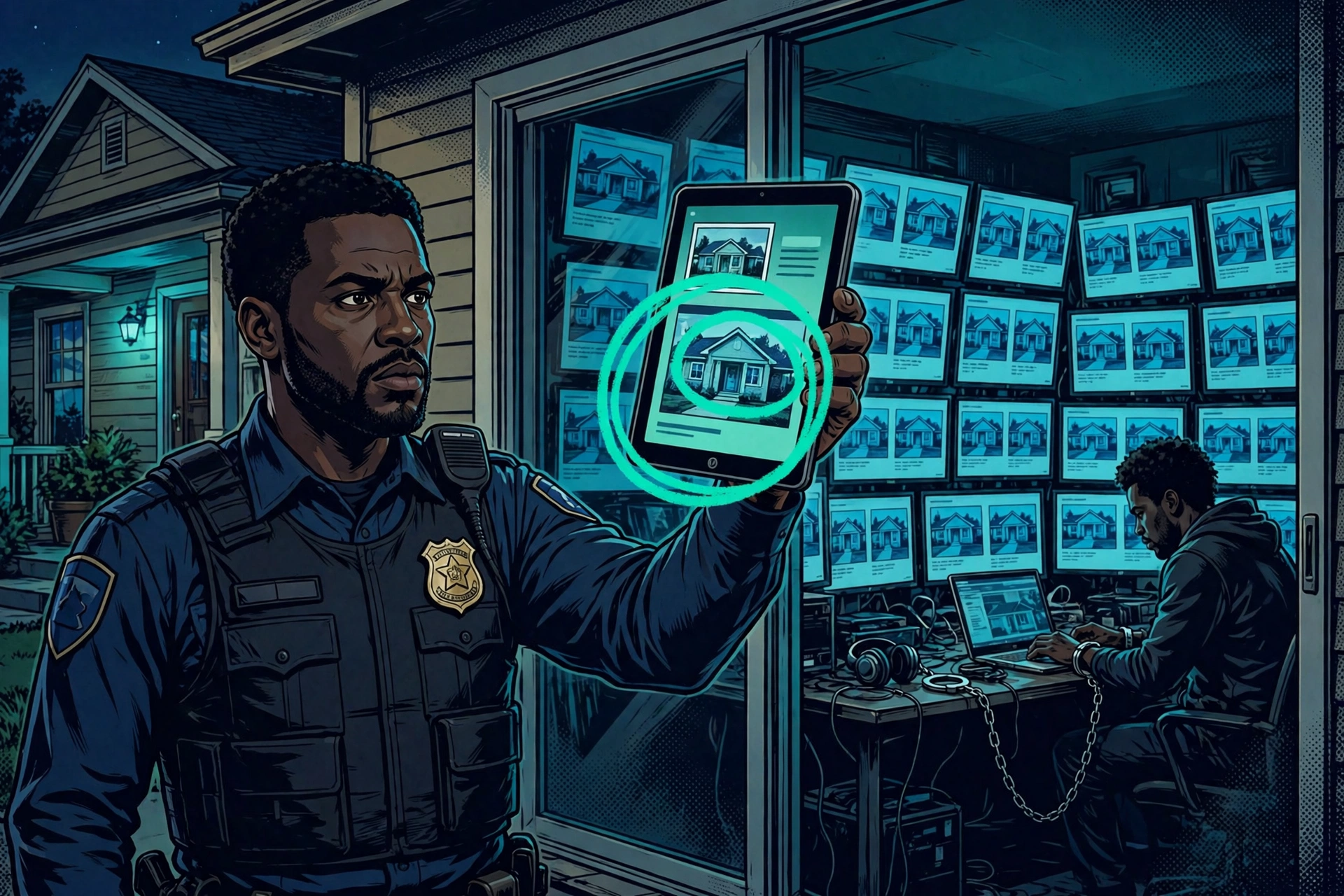
The photos look right. The rent looks better than right. Learning how to spot a rental listing scam starts before you message anybody: the place in the pictures may be real, and the person collecting the deposit may still have no right to rent it. A tether behind a screen copies a home, drops the price, and waits for a renter in a hurry to pay for a door he cannot open.
Slow the deal down. Every check below runs from your phone, before a dollar moves.
The scale, on the record
The FTC's Data Spotlight from December 2025 counted nearly 65,000 rental scams reported from January 2020 through June 2025, with about $65 million in losses and a median loss of $1,000. The FTC is plain that this is a fraction of the real harm — most scams never get reported at all.
In the 12 months ending in June 2025, about half of those who named a platform said the scam started with a fake ad on Facebook; another 16% named Craigslist. People aged 18 to 29 were three times more likely than other adults to report losing money. Verified 7 November 2026 against the FTC's published spotlight and guidance.
How to spot a rental listing scam: the two patterns
The FTC says rental scams run one of two ways. Name the pattern and the rest of the pitch falls apart.
The hijacked listing. The scammer copies the pictures, description, even the virtual tour from a real ad, swaps in his own contact details, and reposts it elsewhere. Call the number and you are talking to the copy, not the landlord. The home may also turn up listed for sale, not for rent — the FTC calls that a big red flag.
The phantom listing. There is no rental at all. The ad invents a place, or lists one that is not available, with rent set low enough to stop your scroll. Ask to see it and the excuses start: the owner is out of the country, you can drive by but you cannot go in. What you can do, right now, is wire a deposit to hold it.
Both end the same way. You pay a fee, a deposit, or first month's rent — or hand over a Social Security number, a licence photo, and pay stubs on a fake application — and the person vanishes.
Rental scam red flags in the listing itself
One flag can show up in an honest ad. A cluster is a fake apartment listing introducing itself:
- Rent far below the street. Compare three similar places nearby. A price hundreds below its neighbours is bait, not luck.
- No showing, ever. You cannot tour it, meet anyone, or get a live walk-through — but a self-guided lockbox code is somehow on offer after you pay.
- Pressure with a clock on it. Other applicants are circling, the deal dies tonight, decide now. The FTC's advice on this one is short: walk away.
- The same address, a different name. Search the address with the owner or company name. Other ads for the same home under a different name point to a hijack.
- Personal information too early. Until you have agreed to rent, a landlord does not need your Social Security number or credit score. Real landlords pull a credit report themselves; they do not send you a link to buy one.
- A credit-check link with a subscription in it. The FTC warns scammers steer renters to credit sites that quietly enrol them in a paid membership. The fee is the product.
How to verify a landlord before any money moves
How to verify a landlord is not a gut feeling. It is three records you pull yourself.
First, search the address on its own, then with "for sale," then with the management company's name. A home listed for sale, or for rent by a different company at a different price, settles the question.
Second, check ownership. City and county tax assessment sites show who owns the property. Ask the person showing the home for identification and a business card from the company that owns or manages it, and match the name to that record. If the names do not meet, the deal does not move.
Third, contact the company on ground you walked to yourself. Find its own website without using any link in the ad, call the number published there, and ask whether the listing and the agent are theirs. If the property is not on the company's own site, treat the ad as unproven.
A tour alone is not proof. Scammers have copied self-tour listings and sent lockbox codes for homes they do not control. Seeing the kitchen does not tell you who may collect the deposit.
The payment tell that settles it
Read how you are told to pay. The FTC is blunt: if anyone insists you can only pay with a wire transfer through Western Union or MoneyGram, gift cards, or cryptocurrency, it is a scam. Those methods work like cash. Once the money goes out, you probably cannot get it back, and that is exactly why the tether insists on them.
His second demand is timing: a fee or deposit before he will show you the place. Keep looking. That pay-first sequence is the same move this patrol flagged in the job offer scam playbook. A real landlord shows the home, puts the terms in a lease you can read, and then takes payment with a paper trail. Credit card payment carries the strongest protection the FTC names; cash-like payment to a stranger carries none.
If the listing fails the checks
Report the ad on the site where you found it. Report it to the FTC at ReportFraud.ftc.gov, to your state attorney general, and to local law enforcement. If you already paid, contact the bank, card issuer, or payment service right away — speed is the only leverage left. If you sent personal documents, watch your credit reports and consider a freeze.
The officer's beat is set out on the About page. If a fake listing is working your neighbourhood or your campus group, put the address and the ad in front of this patrol through report a tether. Patrolling the online borders, one tether at a time.
Sources and further reading (checked 7 November 2026): FTC — Rental Listing Scams · FTC — You got the apartment! Spot rental listing scams before you pay · FTC Data Spotlight — Rental scams hit home with $65 million in reported losses (December 2025)
Tags: how to spot a rental listing scam · rental scam red flags · fake apartment listing · how to verify a landlord