
Harriet. Aretha. Now Afeni: Cynthia Erivo Keeps Getting Cast as Our Ancestors
Listen to this article
Press play and take the patrol report with you.
Or listen in another language / choose a voice
Getting your device voices ready…
The announcement came down on Wednesday, straight from The Hollywood Reporter: Cynthia Erivo will play Afeni Shakur in Snoop, Universal's biopic of Snoop Dogg. Afeni Shakur. Black Panther. Beat the state of New York in a courtroom representing herself. Raised Tupac. And the part is going to a British actress from Stockwell, London — again.
And before anybody asks: yes, the patrol noticed whose movie this is. Snoop Dogg is a producer on his own life story, through his own company, Death Row Pictures. The call, as the young folks say, came from inside the house. Unc signed off on this one himself. The patrol will let that sit right there for a second.
Because the objection lighting up Black American timelines this week is not new, and it is not complicated. It is the same objection from 2018, word for word: Hollywood keeps reaching across an ocean for the same imported actress to play the women this lineage holds sacred — while she is on record, in her own words, treating the whole conversation like a nuisance. The patrol reads receipts. Let's read them.
The receipt from 2013
Back in 2013, years before the fame, Erivo posted this — preserved in compilations, confirmed by EBONY this week and by a university study of the backlash that coded more than six thousand posts about it:
"@JoelMontague (ghetto american accent) baby u know I gatchu imma sing It To you but I still gatta do wadigattado, you feel me #scene xxx"
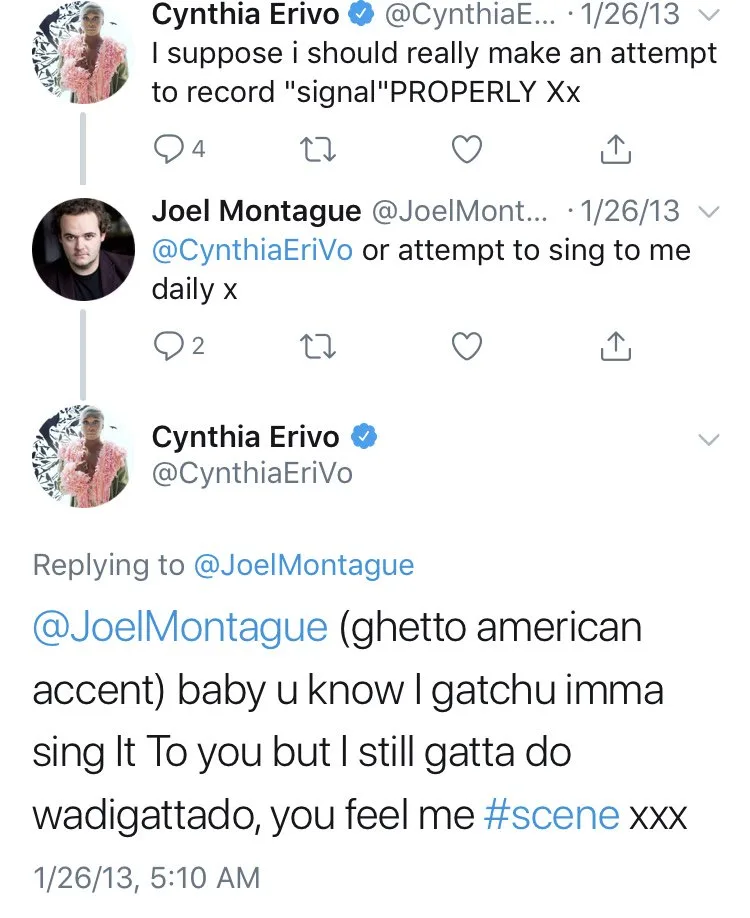
Read it again. "Ghetto american accent." That is a London actress doing Black American speech as a punchline — mock spelling, mock grammar, the whole minstrel starter kit in one tweet. When it resurfaced in 2018, as she was being handed Harriet Tubman, her defence was that it was "taken out of context," that it "wasn't mocking anyone really," that it was about a song she wrote at sixteen. She has explained it at festivals, on Oprah's couch, everywhere but one place: she has never once stood up and said the plain sentence — that was wrong, and I'm sorry. The patrol checked the record across eight years of coverage. Explanation everywhere. Apology nowhere.
One fairness note, because the patrol is petty but never sloppy: a different set of ugly old tweets about Black Americans belongs to the writer Luvvie Ajayi, not Erivo. Folks keep pinning them on her. They are not hers, and this patrol does not do mistaken identity.
Harriet. Aretha. Afeni.
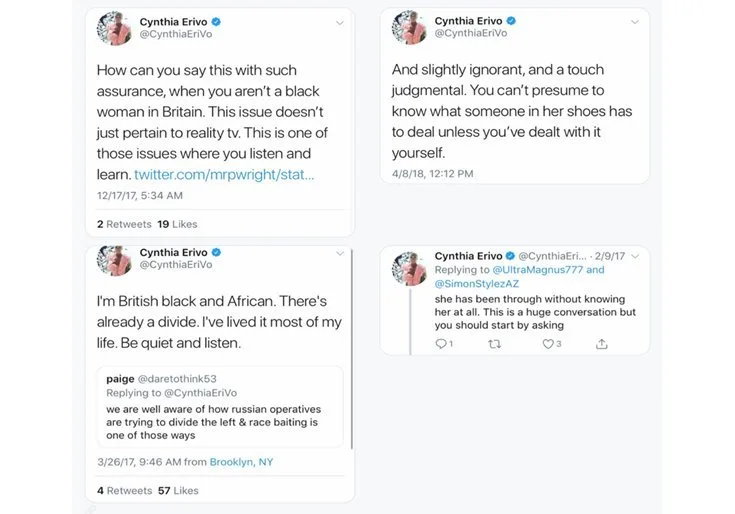
Now the pattern, because one role is a casting choice and three is a policy. Harriet Tubman in Harriet (2019) — the most sacred name in this lineage, a woman who walked back into slavery again and again to lead her people out. Aretha Franklin in Genius: Aretha (2021) — Memphis-born, Detroit-raised, the Queen of Soul. Before those, Celie in The Color Purple on Broadway. And now Afeni Shakur. EBONY opened its own coverage this week with the roll call: "Harriet. Aretha. Celie." The patrol just adds the newest name.
Nobody on this side of the water is confused about whether the woman can act. She has a Tony, a Grammy, an Emmy, three Oscar nominations. Talent is not the charge and never was. The charge is that an industry that employs thousands of Black American actresses — women who grew up in these churches, at these kitchen tables, on these porches — keeps deciding that the definitive face of Black American womanhood lives in South London. When Harriet's director defended the pick, she said she wanted an actress with "recent ancestors from West Africa." Cousin, that is the quiet part said out loud: the lineage of the people Harriet actually freed was treated as a disqualification.
And on Aretha, one correction the patrol insists on, because accuracy is the whole uniform: when the Franklin family spoke out in 2021, their smoke was for National Geographic and the producers who froze them out — the family said plainly they had no grievance with the actors. The estate had even blessed Erivo in 2019. The patrol aims where the record points.
"A waste of everyone's time"
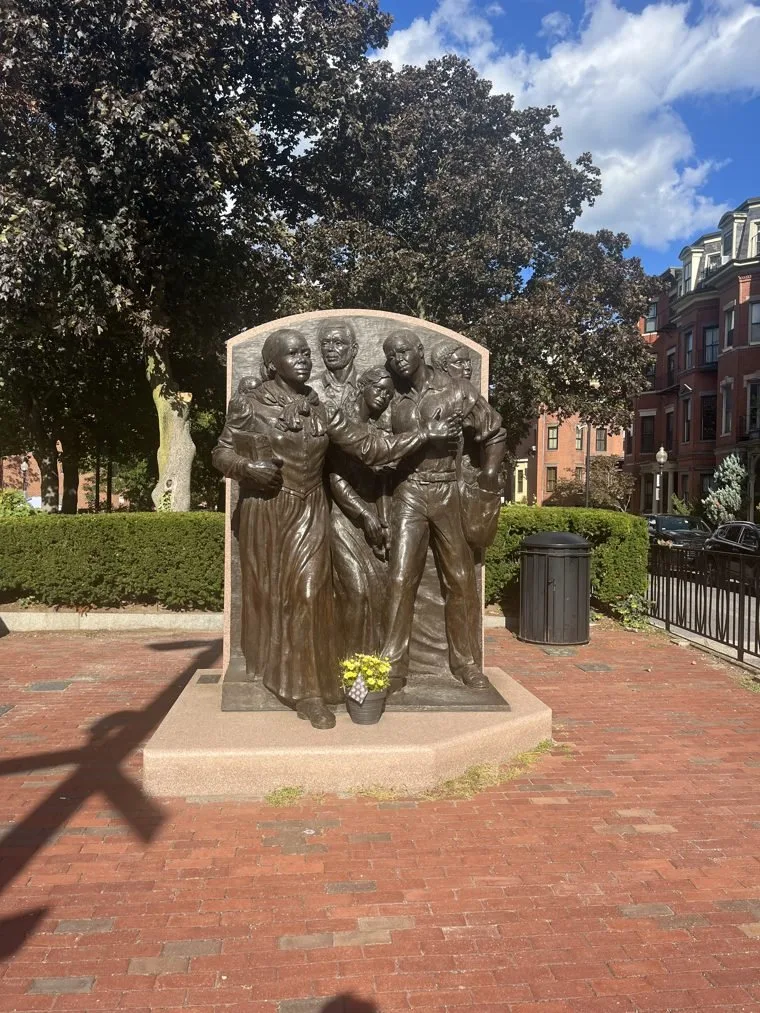
Here is the part that turned an old argument into this week's fire. On 27 October 2026 — one week before the Afeni announcement — The Guardian asked Erivo about the fact that Black Americans keep objecting to her playing their icons. Her answer, verbatim: the debate is still happening, and "I think it's a waste of everyone's time." She added that she has empathy, but that it is also hard for "a Black English kid from London" to make it.
Seven days later: Afeni Shakur.
You cannot script contempt cleaner than that. A people's objection to who portrays their ancestors — dismissed as a waste of time, on the record, days before she collected the next ancestor. In 2019 she at least asked for a chance: "See it, and then make your judgments. Give me a chance." By 2026 the mask is off and the answer is boredom. The patrol's judgment, since she asked for it back then: noted, and entered.
Baltimore would like a word
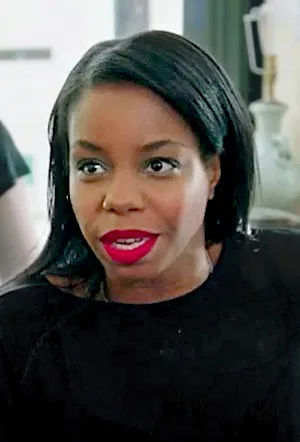
Erivo is the headline, but the patrol works the whole beat, and the beat includes London Hughes — the British comedian who sat across a dinner table from Tammy Rivera on Peacock's Eat Slay Love in 2024 and explained Black American life to the Black Americans at it.
Half the internet swears this happened on Girls Trip. It did not. Regina Hall was not there. The patrol checked: it was Eat Slay Love, Vietnam, a girls' trip show — close enough to confuse everybody, different enough to matter. On camera, per the reporting at the time: Hughes joked about Rivera's hometown, Baltimore, and when Rivera said it was where she grew up, Hughes told her she was "so sorry." Then, at dinner, she argued that the poverty, the crime, the "ghetto" conditions Black Americans live with don't really exist like that in Britain. Tammy Rivera's answer deserves its own frame: "How the f--- can you say that when you're not from the ghetto? You don't know those people's stories!" Hughes walked out and left the trip early. Eva Marcille said what the whole table was thinking: if you're not a Black American woman, you don't understand it — and you can disagree without disrespecting.
A year later Hughes was online praising Black Americans for "standing on business," and a year after that she was alleging she was the one bullied on that trip — claims no outlet has verified and the patrol treats as exactly that: claims. The dinner, though, is on camera and on the record. A guest, in somebody else's house, grading the neighbourhood she just walked into. Baltimore sends its regards.
The imported bench runs deep
Erivo and Hughes are the headlines, but the patrol works the whole bench — and this fall the bench produced its own star witness. Da'Vinchi — born Abraham D. Juste in Brooklyn to Haitian immigrant parents, and known to television as Terry "Southwest T" Flenory, the Detroit kingpin he played across four seasons of Starz's BMF — sat down on Cam Newton's Funky Friday podcast and said the quiet part out loud. Asked about British actors landing Black American roles, he answered: "Sometimes if you get a British actor that plays the part just as well... it could be cheaper." The pipeline, in his own telling, runs on a discount. And when the conversation turned to the work-ethic slander that gets aimed at Black Americans, the Haitian-American leading man — raised by his grandmother to be self-sufficient by the age of eight — did not defend the house that feeds him. He repeated the slander: "I think this country promotes that." A Detroit legend's story paid for four seasons, and the thanks the lineage gets is a shrug and a stereotype. The patrol did not have to reach for this receipt. He handed it over himself, on camera.
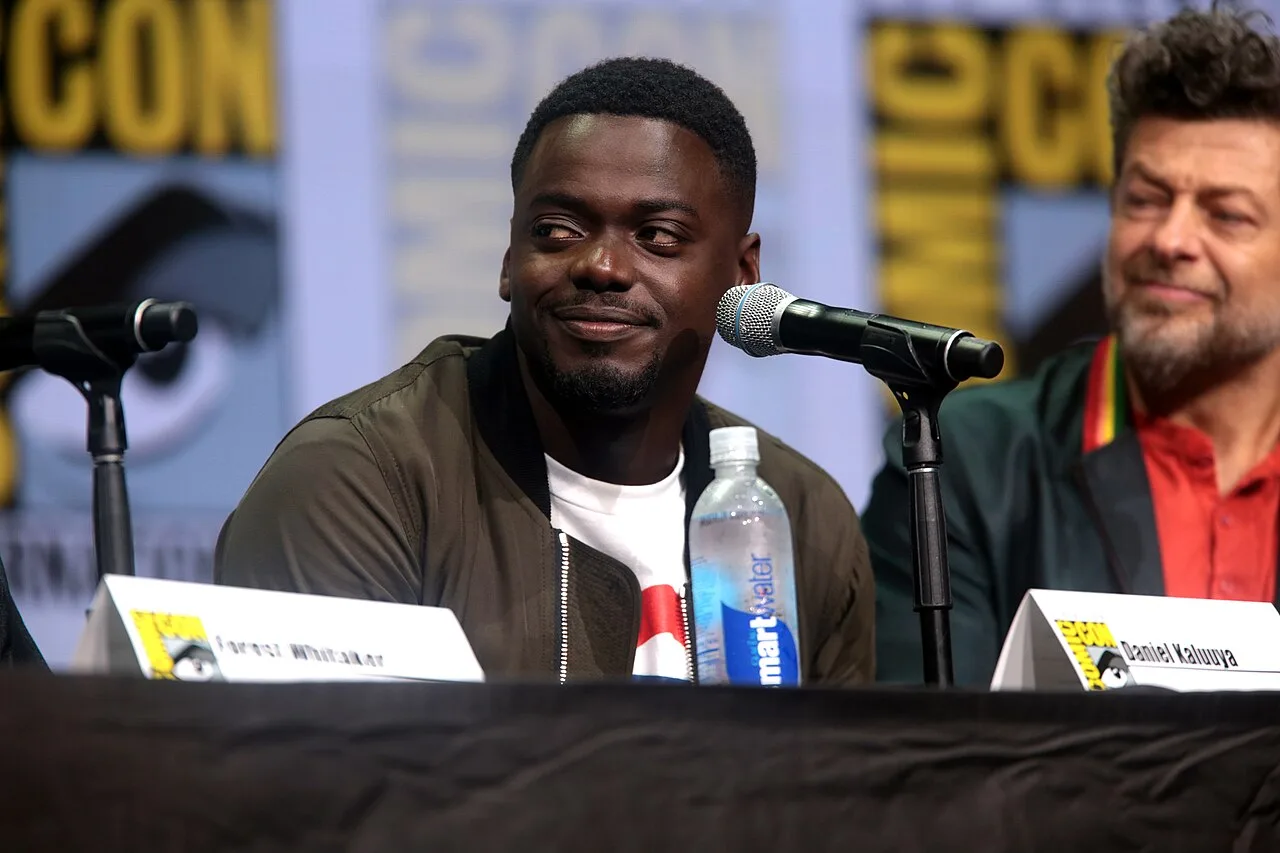
And the bench he is describing is real, and it is long. David Oyelowo played Dr. Martin Luther King Jr. in Selma (2014). Daniel Kaluuya played Fred Hampton — chairman of the Illinois Black Panthers, murdered in his bed by the state — in Judas and the Black Messiah (2021), and took home the Oscar for it. Daniel Ezra carried All American for six seasons as Spencer James, a character built on a real South Los Angeles football player. Idris Elba's Stringer Bell remains one of the defining performances in American television. King. Hampton. The ancestors and the icons, imported again and again — while Black American actors say the quiet part themselves. Larenz Tate, in 2023: "We are just as talented as our counterparts from overseas... Hollywood believes there's more value in British Black actors than they do in Black actors." When the imports' own price tag is being read out loud on podcasts, the patrol is not imagining the pattern. The patrol is reading it.
The patrol checked the viral stats, too
Because this argument travels with numbers, and the patrol does not repeat numbers it hasn't frisked. The claim going around says Nigeria and Jamaica run "neck and neck" as the world's capitals of skin bleaching and paternity fraud. Frisked: the famous "77% of Nigerian women bleach" figure comes from a 1998 survey of market traders in Lagos — 450 people, men and women — and the researcher herself says it was never a national number. Jamaica actually ran a national survey and landed at about one in ten, ever. The "Jamaica 34.6% paternity fraud, highest in the world" ranking traces to a source listed, and the patrol is not making this up, as "ResearchGate." The real Nigerian lab number — one in four tests coming back negative — comes with the lab's own warning that its customers are men who already had doubts, which is how disputed tests look everywhere on Earth. The patrol roasts with receipts, not with memes. The documented record in this story is damning enough; nobody needs to borrow fake statistics to carry it.
What is a tether?
New readers land on this beat every week, so the patrol states the term plainly. "Tether" comes from Jordan Peele's Us (2019). In the film, the Tethered are doubles — copies of real people, raised in tunnels underground, chained to the lives being lived above them, until the day they surface to cut down and replace the originals whose place they mean to take.
That is exactly the shape this patrol was named for. The patrol keeps the full working definition on file — what a tether is, where the word came from and how the argument runs on both sides — but the short version is this: out here, a tether is somebody who latches onto Foundational Black Americans — onto the culture, the lineage, the history, the music, the very ancestors — feeds off the connection, and works the whole time to undermine and replace the real people, talking down on them while wearing their lives. Hiding behind screens, slick in the comments and the casting announcements, then surfacing to take the role, the seat, the microphone.
Read this story back through that lens and it names itself. Cast as Harriet, as Aretha, now as Afeni — the ancestors themselves — while the record shows the "ghetto american accent" joke and the objection to it waved off as a waste of everyone's time. Latched on. Feeding. Undermining. That is the whole anatomy of a tether, and it is why the officer patrols this border.
The patrol's position
Foundational Black Americans built a culture out of a country that was built to break them — the music, the language, the church, the whole American songbook runs through it. That culture is not a costume rack for whoever flies in, and its ancestors are not open casting calls. Harriet Tubman went back into the dark for her people. Afeni Shakur beat a courtroom full of prosecutors by herself. The women who play them should, at the bare minimum, be able to hear this people's objection without calling it a waste of time.
The officer's beat is set out on the About page, and the lineage at the centre of this story is introduced in Foundational Black Americans. For the last import who tried to borrow this culture's voice and got waved on, see New York Is Not a Nationality. Patrolling the online borders, one tether at a time.
Sources and further reading (checked 8 November 2026): EBONY — Erivo cast as Afeni Shakur; the debate reignited, incl. the 2013 tweet · XXL — Erivo cast as Tupac's mother in the Snoop Dogg biopic · HotNewHipHop — the Guardian interview and the Harriet history · Distractify — the Eat Slay Love cast on the London Hughes conflict · Africa Check — the 77% skin-lightening claim, traced · Arise News — Smart DNA Nigeria's 2025 report and its own caveat · Urban Hollywood 411 — Da'Vinchi weighs in on the British-actor debate, incl. the Larenz Tate quote · Wikipedia — Da'Vinchi
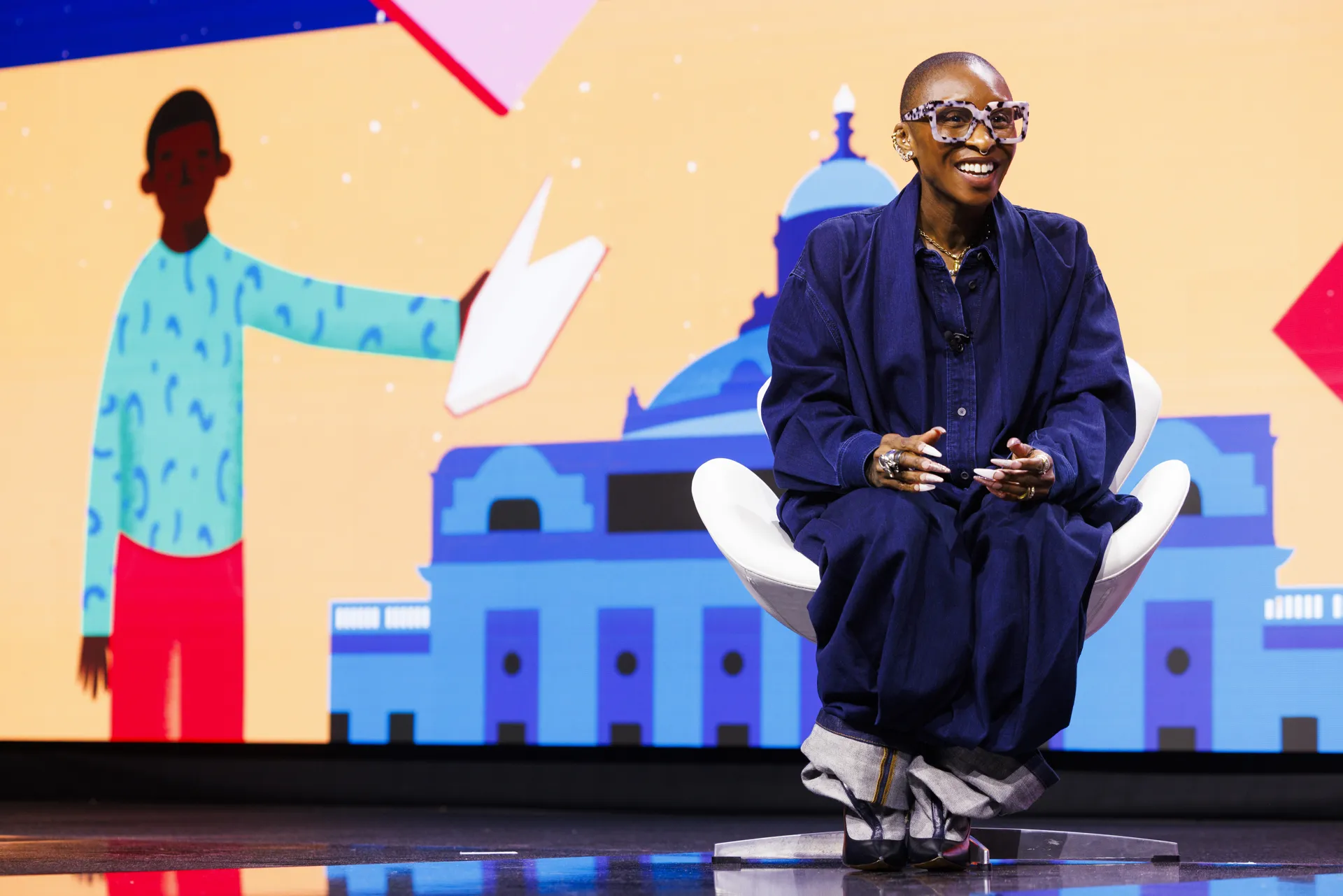
Photo: Cynthia Erivo at the Library of Congress National Book Festival, 2026, by Shawn Miller / Library of Congress, CC0.
Tags: Cynthia Erivo Afeni Shakur · Cynthia Erivo Tupac mom · Cynthia Erivo Harriet · Snoop Dogg biopic cast