
How to Spot a Crypto Investment Scam Before You Send the Money
Listen to this article
Press play and take the patrol report with you.
Or listen in another language / choose a voice
Getting your device voices ready…
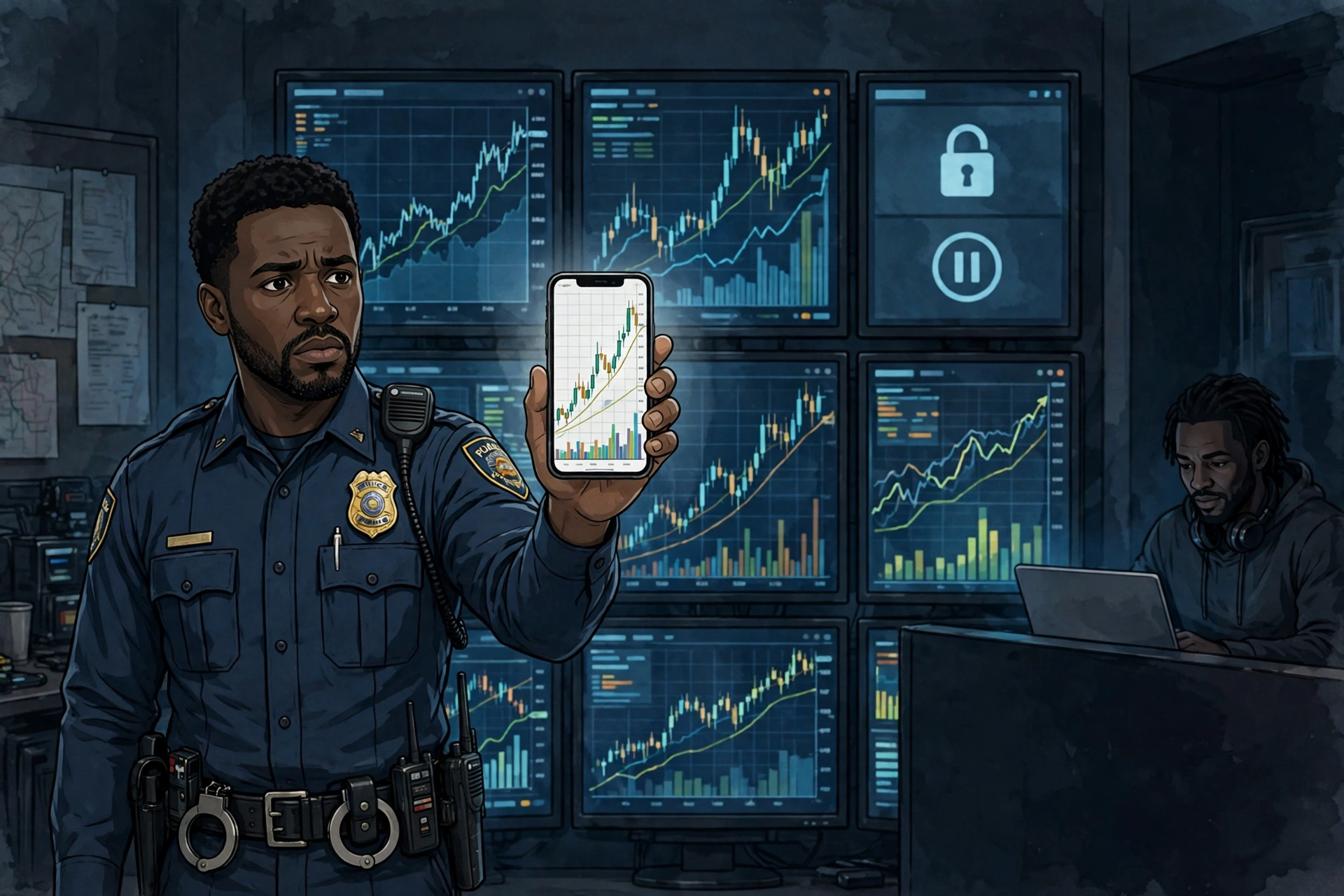
The message looks like a mistake. Wrong number, sorry, hope you are well — and then a conversation that will not quit. Learning how to spot a crypto investment scam starts there, weeks before any money moves: the friendly stranger is the setup, and the trading app he later hands you is the trap.
Slow it down.
The scale, on the record
The FBI counted 61,559 complaints about cryptocurrency investment fraud in 2025, with $7.228 billion in reported losses — the largest single source of losses in its 2025 Internet Crime Report, up 48% in complaints from the year before. Most victims never file at all. Verified 12 November 2026 against the FBI report and the guidance below.
Pig butchering scam signs: the long con, stage by stage
The costliest version has a name the criminals gave it themselves. FinCEN laid it out in an alert on 8 September 2023: "pig butchering" resembles fattening a hog before slaughter. Victims are built up with a fictitious identity and the guise of a relationship, then defrauded — the butchering. FinCEN says criminal enterprises based in Southeast Asia largely run the schemes, using victims of labour trafficking to work the outreach.
The stages repeat often enough to memorise:
First contact. A wrong-number text, a dating-app match, or a group chat you never asked to join. You answer politely. The stranger stays friendly.
The move. Within days the chat lands on WhatsApp or Telegram — away from the reporting tools of the original app.
The trust build. Weeks of ordinary talk, a comfortable life shown rather than bragged about. Nothing is asked for. That patience is the product.
The tip. The contact mentions doing well trading crypto and offers to show you how, steering you to one specific app through a link they send.
The small win. A modest deposit shows a profit on screen. Some victims can withdraw a small amount early. That withdrawal is bait, paid to buy confidence for the larger deposit.
The squeeze, then the wall. You are pressed to put in more — savings, a loan, a retirement account. When you try to withdraw, the account freezes and a tax or fee appears between you and your money. Pay it and another appears. Then the platform and the person go quiet.
How to spot a crypto investment scam: the red flags in the pitch
The FTC's line is short: only scammers guarantee profits or big returns. Crypto prices swing by the hour. A promise of steady profit, low risk, or a set daily percentage is not a strategy. It is a script.
Run through the crypto investment scam red flags that federal agencies name again and again:
- Guaranteed returns. The CFTC warns that a site promising to multiply your money in days or weeks is a fraud. No bot or signal can promise a risk-free result.
- You met the promoter online. Most schemes begin on social media or messaging apps. The FTC's rule: never mix online dating and investment advice.
- Payment only in crypto. Only scammers demand payment in cryptocurrency, the FTC says. A confirmed crypto payment usually cannot be reversed — which is why the platform insists on it.
- Pressure and secrecy. A deadline, a loan offer to invest more, and an instruction not to tell your family or bank. Secrecy protects the scheme, not you.
- No address, no phone. The CFTC counts a missing physical address and customer service number as a red flag on its own.
The fake crypto trading platform check
A fake crypto trading platform can look polished. Polish proves nothing. Registration might.
The CFTC says digital asset platforms must register as money services businesses with FinCEN and, for products that require it, with the CFTC, plus state regulators. Check that claim yourself: open FinCEN's MSB search, type the exact company name, and search the CFTC's RED List of foreign firms that appear to need registration but do not have it. A name missing everywhere means no deposit.
Search the platform's name with "scam," "review," and "complaint." Check the domain age. A firm claiming years of history on a site registered last month has answered your question. Judge the platform by its registration and by who sent you to it — not by a balance on a screen the operators control.
The withdrawal fee is the tell
Every version ends at the same door. You ask for your money back and are told to send more first: a tax, a verification fee, an unlock deposit. Real exchanges take charges out of a balance. Taxes go to a tax authority, not a trading site. The FBI describes that demand as one last attempt to take more before the scammers disappear.
That pay-first sequence is the same move this patrol flagged in the job offer scam playbook, wearing a trading jacket. Stop paying. The next fee is already written.
If money already went out
Stop sending. Do not pay a recovery fee to anyone — the FTC warns that offers to recover lost crypto for an upfront fee are a second scam aimed at people hit by the first, and the FBI says its IC3 does not charge to recover funds and does not work through private recovery firms.
Save everything: screenshots, chats, wallet addresses, transaction IDs, and usernames. Contact the exchange or bank you sent from right away, then file at the FBI's IC3 at ic3.gov, report to the FTC at ReportFraud.ftc.gov, and file with the CFTC at cftc.gov/complaint.
The officer's beat is set out on the About page. If a friendly stranger is steering you or someone in your family toward a trading app, put the name and the pitch in front of this patrol through report a tether. Patrolling the online borders, one tether at a time.
Sources and further reading (checked 12 November 2026): FTC — What To Know About Cryptocurrency and Scams · FinCEN — Alert on Pig Butchering (8 September 2023) · CFTC — Digital Asset Red Flags · FBI IC3 — 2025 Internet Crime Report
Tags: how to spot a crypto investment scam · pig butchering scam signs · crypto investment scam red flags · fake crypto trading platform