
How to Spot a Fake Giveaway Scam Before You Pay to Claim a Prize
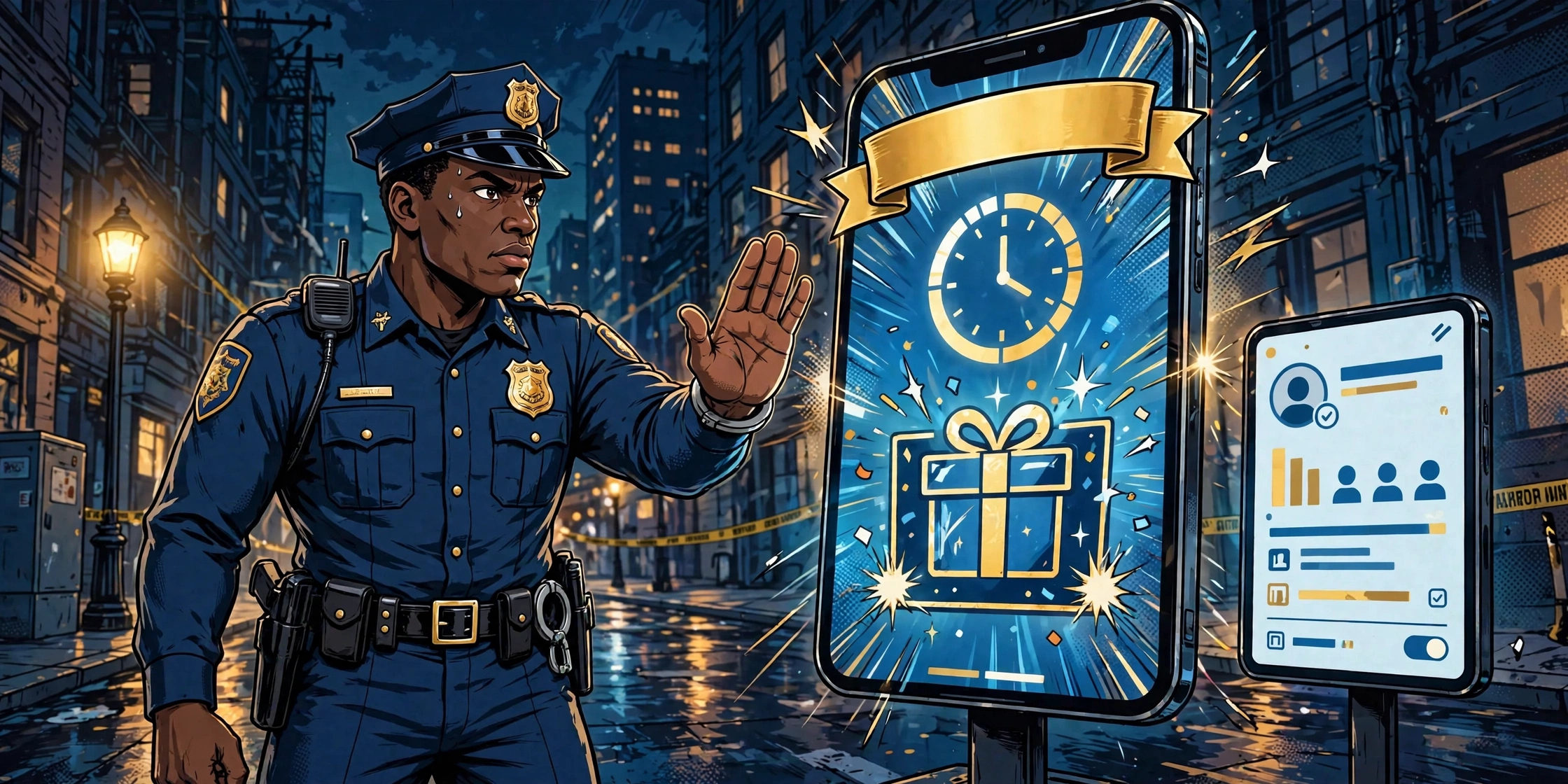
The message lands at the right moment. Rent's due, groceries cost what they cost, and some account with a familiar logo is telling you that you won $750, a new phone, maybe both. All you have to do is claim it. That word — claim — is where the trap sits, and learning how to spot a fake giveaway scam starts right there, before you tap anything.
Because the prize is not the product here. You are. Your fee, your login, your card number — that is what the account was built to collect.
How to spot a fake giveaway scam: start with the fee
The Federal Trade Commission puts the first test in one plain line: if you have to pay to get your prize, it's a scam. Real prizes are free. Not mostly free. Not free after a small charge. Free.
Scammers dress the charge up in respectable words. Taxes. Shipping and handling. A processing fee, a verification deposit. The label changes; the move doesn't. Cash App's own guide says the same thing: any sweepstakes that asks for payment, your password, or your sign-in code is a scam, no exceptions.
So run that test first. Were you asked for money — any money — to release a prize? Then you already have your answer. A gift card counts. Crypto counts. A "small" Cash App payment counts most of all, because a Cash App giveaway scam lives on exactly that payment: quick to send, hard to pull back, gone before the account vanishes.
How the run usually goes
Most fake giveaway scams on Instagram follow a set script, and scripts get easier to spot once you've seen them written down.
An account appears wearing a trusted face — a brand, or a creator you follow, copied photo for photo with one letter changed in the handle. It's young, its whole feed is the giveaway, and then comes a DM saying you were selected. You don't remember entering anything. That gap matters: Cash App says real giveaways don't notify winners through unsolicited DMs from unverified accounts, and if you don't remember signing up, you didn't win.
Next, the link — a page that asks you to log in "to verify." Enter your password there and the scammers take the account itself, then use your face on your followers. The FTC warns about the same shape in its fake prize scam guidance: messages built to pull personal information out of you, sometimes carrying malware links.
Last comes the clock. Claim within ten minutes, or it goes to the next winner. The FTC names that pressure for what it is — a rush to keep you from thinking. A real sponsor can wait until morning. A tether can't.
Five tells on the account itself
Slow down and look at who's talking to you.
- The handle is almost right. One letter swapped, an extra underscore, a zero standing in for an O. Compare it character by character with the real account — which you should find yourself, never through a link the message gave you.
- The account has no past. Twelve posts, all from this week, nothing before the prize showed up.
- There are no rules. Legitimate giveaways publish official terms: who can enter, when it ends, how a winner is picked. A prize with no rules has no sponsor behind it.
- Everyone in the comments already won. Rows of accounts shouting that they got theirs, none with real lives behind them. That crowd was built, not gathered.
- The win keeps moving. You claimed it, but now there's a shipping charge. You paid that, and now there's a tax. That staircase is the scam working as designed.
The TikTok rewards version
One current variant skips the DM and builds a fake storefront instead. Malwarebytes described it in August 2026: TikTok-branded rewards pages promising cash for daily check-ins and small tasks, with points that convert into a balance in the thousands and a countdown warning the money is about to expire.
Try to withdraw and a new requirement appears. Refer more friends. Download a separate app to verify yourself. The balance was never a balance — Malwarebytes notes those numbers have no connection to TikTok's actual systems, and TikTok's real Creator Rewards Program runs inside TikTok itself, for eligible creators. The clicks and installs are what the operator gets paid for. Your payout was the bait.
What to do instead of claiming
Don't argue with the account. Screenshot the profile, the handle, and the message first — evidence disappears when accounts get deleted — then report it on the platform where it found you. On Instagram, Cash App's guide gives the route: tap the three dots on the post or profile, choose Report, and pick the scam or fraud reason. Report the prize pitch to the FTC at ReportFraud.ftc.gov as well.
Then check the real thing yourself. Open the brand or creator's verified account by typing their name in, and look for the giveaway there. If it isn't on the official account, it doesn't exist.
And put the patrol on it. Fake giveaway pages are exactly the accounts named in Meet Tether Patrol — the ones this site was built to call out. If a fake account is working your people, report a tether with the screenshots you saved. You get a case number, and the account goes on the board.
If you already clicked or paid
Move fast, and skip the embarrassment — these pages are built by professionals.
If you entered a password on a claim page, change it now, starting with your email, then your social and payment accounts, and turn on two-factor authentication. If you sent money, contact the payment app or your bank right away and report it; Cash App advises exactly that, plus watching your activity for anything you don't recognize. If a link made you install something, delete it and run a security scan.
The win was never real. Your next step can be.
Sources and further reading (checked 23 October 2026): FTC — Fake Prize, Sweepstakes, and Lottery Scams · FTC — No prizes from the FTC · Cash App — Giveaway Scams: Spot, Avoid & Report Them · Malwarebytes — Fake TikTok rewards promise cash you'll never get (17 August 2026)
Tags: how to spot a fake giveaway scam · fake giveaway scam on Instagram · Cash App giveaway scam · fake prize scam