
New Tether on the Report: @randykonsey and the School Skit That Never Names Its Bullies
Listen to this article
Press play and take the patrol report with you.
Or listen in another language / choose a voice
Getting your device voices ready…
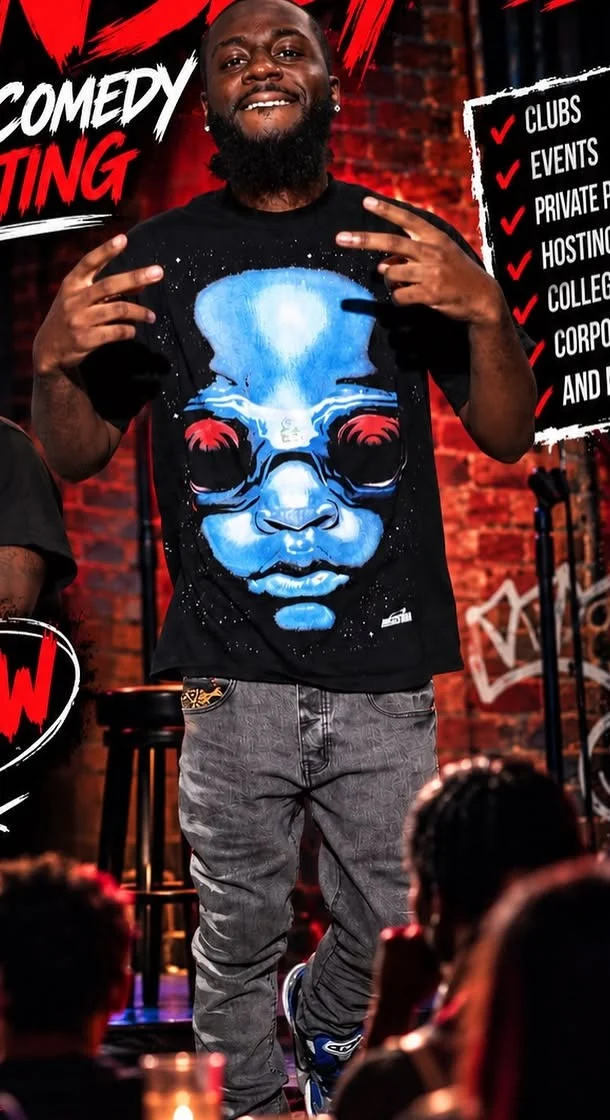
The Patrol has a new name on the report — and this one is WANTED. Case TP-2026-0002 is open on Randy Konsey, a Cameroonian-American comedian who posts as @randykonsey on Instagram — about 571,000 followers watching, New York on his public bios. The charge, filed in full in the case record: spreading false propaganda about Foundational Black Americans. The evidence is his own reel, posted October 31, 2026. He performs every voice in it himself — the new kid and every classmate who hazes him — so there is nobody else to blame for the script. He is a wanted tether on the loose, and the patrol is calling him in for questioning — on the record. If he won't answer, this case goes to a hearing at Tether Court.
What the skit shows
The skit is framed as "Growing Up Going To School in America as an African Kid." Konsey plays Randy, a new student from Cameroon, arriving at an American school with his backpack on. The classmates are never shown. They exist only as voices off camera — every one of them his:
"Chill. What's that smell?" — "bro you smell like fufu and okra soup" — "he over there smelling like straight beans and plantains."
"wait he's dark skinned maybe he's burnt."
"do you speak African."
"I didn't know they had schools in Africa… you probably was running around but booty naked and sleeping outside next to a bunch of lions and giraffes?"
"African booty scratcher."
"You may not pass math."
His caption, in his own words: "SADLY THIS WAS ALOT OF OUR REALITIES." Not presented as a joke premise — presented as a record. This, the caption insists, is what it was like.
What the skit never establishes
Now read the file the way the patrol reads it, because this case is different from the one filed the same night, and the difference matters.
In case TP-2026-0001, the @LE_TERRIBLE skit — see the Le Terrible report and the skit that slanders Foundational Black Americans — put zoo and monkey lines directly in a Black American character's mouth: the slander was spoken, on camera, by name. Konsey's skit never does that. No classmate is named. No classmate is shown. Not one voice in the reel is identified as a Foundational Black American, or as Black American at all. The bullies have no faces, no names, and no identities — only lines.
So who gets blamed? Watch the framing do the work. The setting is "school in America." The caption says "our realities." And the audience — thousands of them — filled in the blank with the default suspect: Black American kids. That is the propaganda mechanism this case charges. A smear does not need to name its target when the discourse has been trained to name it for you. Konsey built the blank, captioned it as fact, and let the thread convict a people his skit never identifies.
The thread is the evidence
The comment count tells the story by itself. The reel drew 2,210 comments — nearly twelve times the roughly 188 comments his posts usually draw, on his own public metrics. The thread is polarized, and both halves are in the file.
The validators confirm the story from their own school years — and the setting they cite, again and again, is New York City schools in the 2000s and 2010s. Hold that detail; it matters below.
The pushback is on the record too. Commenters challenged the story — and the timing. The reel landed on October 31, two days after Javits Frimpong, a 15-year-old African student recently arrived in the Bronx, was shot and killed on his way to school — the case this patrol covered in its reporting on the Javits Frimpong shooting. "Read the room bro," one commenter wrote, "a child just got shot for being African." The skit answered a real African child's death with a cartoon about unnamed bullies — and the unnamed bullies got a name anyway.
Where the kids in those classrooms actually sat
Here is the patrol's position, and it is an argument — but it is an argument with a record under it.
African immigrants in the United States did not scatter evenly across the map. They clustered — hard — in a handful of heavy-immigrant metros. Pew Research Center counts about 1.1 million Black immigrants in the New York City metro area alone, the most of any metro in the country, with Miami and Washington, DC next. The Migration Policy Institute puts the greater New York City and Washington, DC metro areas at the top for sub-Saharan African immigrants, with the top five metros holding about 36 percent of all sub-Saharan Africans in the United States. Foundational Black Americans, meanwhile, are concentrated where they have always been concentrated: Pew counts 56 percent of Black Americans living in the South — the Southeast and Middle America — where schools historically had few African immigrant students at all. (The exceptions the patrol concedes up front: Florida and Atlanta.)
Now put the validators' own setting back on the table: New York City, 2000s and 2010s. Those were some of the most immigrant-heavy classrooms in America — and in the neighborhoods where African immigrant families actually settled, the kid hazed for being African was, far more often than the discourse admits, being hazed inside the diaspora: Caribbean kids and first-generation African kids roasting each other, the way immigrant kids in immigrant rooms do. That is not a prettier story. It is simply the one the settlement map supports. The skit names no bully; the discourse names Foundational Black Americans by reflex; the map says the reflex is wrong.
Why the Patrol files it anyway
A creator with 571,000 followers does not get to caption an unattributed hazing story "our realities" and walk away from where the blame lands. The framing is the act. When the blank is always filled in with Foundational Black Americans — a people who are their own people, a nation formed in America, on this soil, across a history that happened here — the patrol files it, whoever left the blank.
That delineation is the lineage teaching set out by Dr. Claud Anderson, and this patrol stands on it: Foundational Black Americans are not the default suspect in every diaspora schoolyard story, and they are not answerable for lines nobody can attach to a single named one of them.
Wanted for questioning
Case TP-2026-0002 now carries a wanted status. Randy Konsey is a wanted tether on the loose, and the patrol is calling him in for questioning about the skit — on the record, in the open, the same way the charge was filed. These are the questions waiting for him, every one of them drawn from his own reel and his own thread:
- Your bullies have no faces and no names. Who were they? Name the Black American students you say did this — or admit the skit never establishes who they were.
- You performed every voice yourself. When you wrote "African booty scratcher" into an unnamed classmate's mouth, who did you intend your audience to picture?
- Your caption says "SADLY THIS WAS ALOT OF OUR REALITIES." Whose reality is on the record here — yours, from your own New York school years, or a character's? Say which, plainly.
- Your thread ran to 2,210 comments — nearly twelve times your usual count — with readers naming Black Americans as the bullies your skit never names. Did you correct a single one of them? If not, why not?
- The reel landed two days after Javits Frimpong was killed walking to school in the Bronx, and your own commenters told you to read the room. What do you say to them?
A tether answers on the record the same way he posted: publicly, where everyone can read it — a public reply to this case, or through the patrol's own reporting channel at /report-a-tether. The patrol prints answers where they exist; that has always been the policy on this beat.
And if he won't answer? Silence is an answer the file knows how to read. A wanted tether who refuses questioning does not make the case go away — he moves it. Case TP-2026-0002 will be called for a hearing at Tether Court, where the record — his reel, his caption, his thread — speaks in full, with or without him.
The case
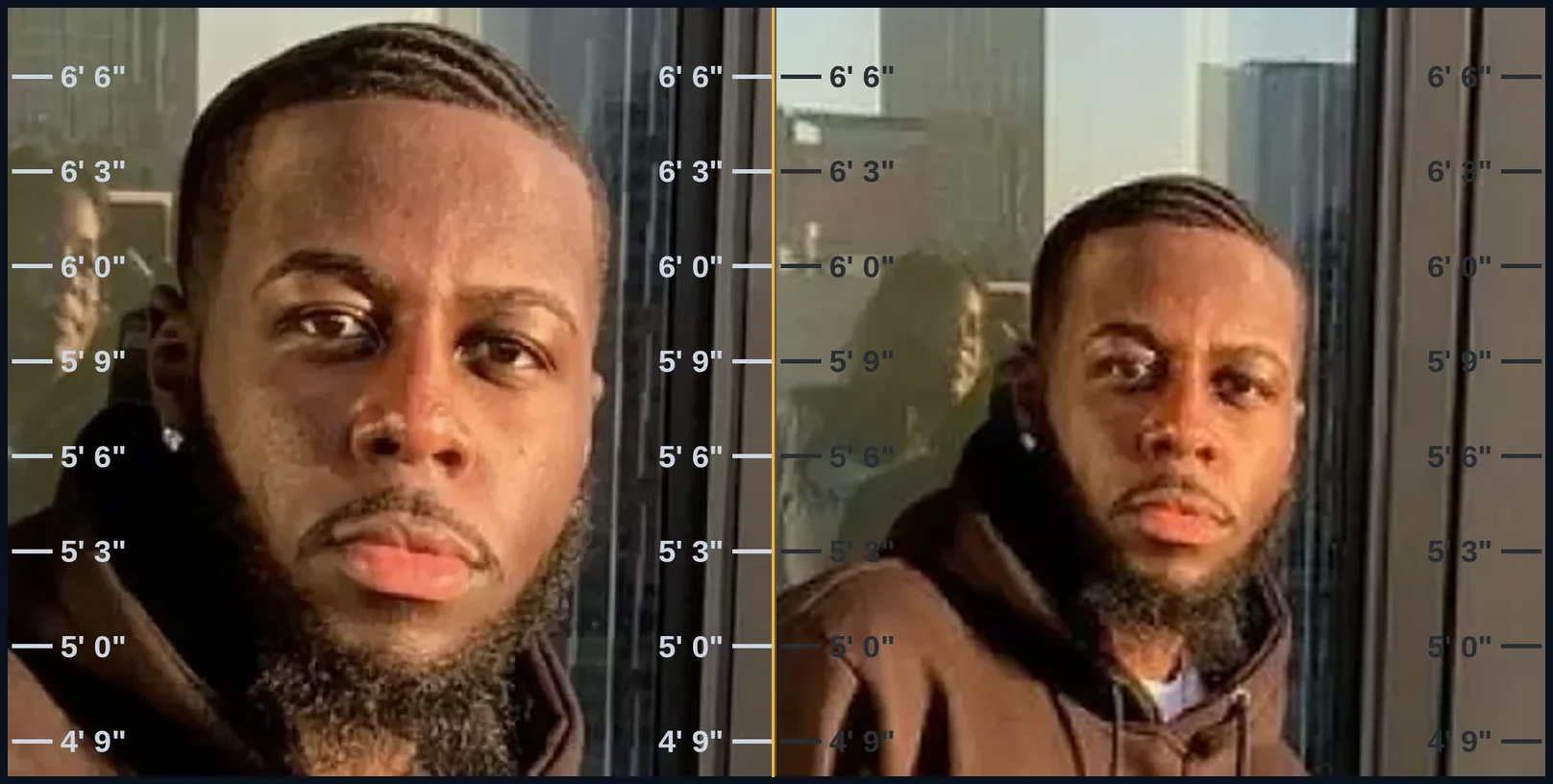
Case TP-2026-0002 is open and under review. Filed with it: the patrol's evidence note, the fetched post record, and the archived transcript of the reel. The video file itself could not be attached — it is not downloadable through the patrol's channels, and the file says so plainly; the reel, live on his page, is the evidence of record. His booking photos ride with this post — built from his public bio photographs, because no frame of the reel could be pulled: the face behind the screen, on the record, sourced in the open.
Spot a tether doing the same — slandering the lineage, mining it, hiding behind a screen to do it — and put the patrol on the case: reports are taken at /report-a-tether, and every case is checked against the record before it is filed.
Patrolling the online borders, one tether at a time.
Sources and further reading (checked 1 November 2026): the subject's own reel, @randykonsey, "Growing Up Going To School in America as an African Kid" (31 October 2026) — post record and transcript filed in case TP-2026-0002 · Pew Research Center, "Key findings about Black immigrants in the US" (20 March 2026) · Migration Policy Institute, "Sub-Saharan African Immigrants in the United States" · Pew Research Center (14 April 2022): 56% of Black Americans live in the South · the subject's public account metrics (nanopost, checked 1 November 2026): roughly 188 average comments per post against this reel's 2,210 · Foundational Black Americans: Lineage, History, and Who the Term Describes
Tags: Randy Konsey Foundational Black Americans · Randy Konsey skit · African booty scratcher · growing up African in America · tether report TP-2026-0002