
Black American Ethnogenesis: A New People Formed on This Soil
Listen to this article
Press play and take the patrol report with you.
Or listen in another language / choose a voice
Getting your device voices ready…
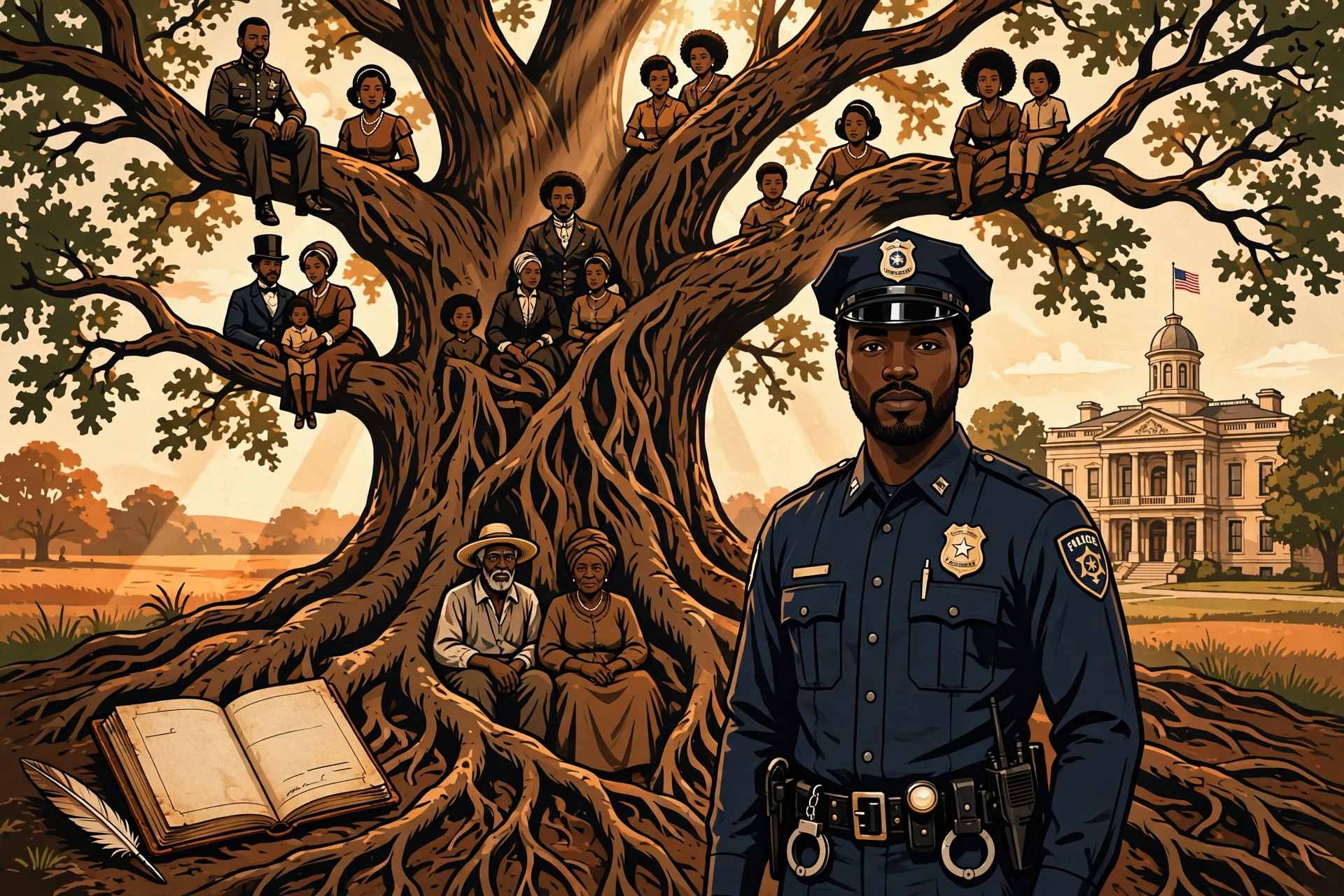
Black American ethnogenesis is the short version of a long argument this patrol keeps having online. A tether pops up in the comments, calls the lineage a club, a trend, a made-up internet label — and the whole thread burns an hour on a question that scholars settled in plain language a long time ago. A people formed here. In the United States. With a culture, a history and a claim that belong to this soil and nowhere else. That forming has a name, and the name is ethnogenesis.
What is ethnogenesis?
Start with the word itself. Ethnogenesis comes from two Greek pieces: ethnos, a group of people or nation, and genesis, a beginning, a coming into being. Put together, it means the formation and development of an ethnic group. Anthropologists have used the term since the twentieth century for something anyone can watch happen across history: separate populations, thrown together by place and circumstance, become one new people with a shared identity that did not exist before.
The process runs two ways. It can happen on its own, slowly, as a group picks up markers of identity from its environment — its land, its faith, its dialect, its troubles. It can also be pushed, deliberately, by law and policy from the outside. Either way the end product is the same: a distinct people, self-aware, with customs and memory that are theirs alone.
Scholar Denise N. Obinna, writing in the Journal of Black Studies in 2024, describes ethnogenesis as the historical emergence of a group of people who define themselves through a common socio-cultural and historical heritage. Read that definition twice. Common heritage. Shared history. A people naming itself out of what it lived through together. That is not a hashtag. That is a description of nation-building at the level of a people.
A people formed here, not imported
Now put the definition on American ground. The people this patrol calls Foundational Black Americans were already here — present in the colonies, present at the founding, present in every chapter of the country's record since. Their ethnogenesis ran through American conditions, start to finish: slavery inside the United States, emancipation on American paper in 1865, the Freedmen era, Black Codes, Jim Crow, the Great Migration from the rural South to northern cities and back again, and the long fight for civil rights on American streets.
What came out of that crucible was new. A distinct language pattern. Churches built as the first free institutions of the community. Music, foodways and family structures forged under American pressure and American law. The reference works say it flatly: Black American ethnicity stems from this unique ethnogenesis, and the heritage it produced differs from that of Black immigrants, who carry the ethnic identities of their own homelands. Two people can share a racial label at a traffic stop and still belong to entirely different peoples, with different histories and different claims. Race is the category the census sees. Ethnicity is the lineage underneath it.
That is why the lineage test is descent, not complexion. The American Freedmen lineage runs through people held in slavery in the United States and the freed generation that followed them — the same line Congress wrote into the Freedmen's Bank charter in 1865, covered in this patrol's file on Freedmen's Bank history. A bank, a bureau and a body of law all treated that line as a specific people with specific standing. Paper does not invent a people. Paper only records the one that was already standing there.
Native Black Americans: the name Dr. Claud Anderson used
Long before the current vocabulary, Dr. Claud Anderson gave this people a working name: native Black Americans. In Black Labor, White Wealth (1994) and PowerNomics (2001), Anderson argued that the descendants of American slavery form a non-immigrant people whose labor built this country, and that folding them into generic labels — minority, people of color, a flat global category with no history attached — erases the specific debt and the specific standing they hold.
His point was practical, not poetic. A native people has claims tied to the nation it helped build: claims to land, to capital, to policy written for its repair first. An immigrant story, however hard, starts somewhere else and arrives by choice. Mixing the two stories in one bucket serves everybody except the people at the bottom of the bucket. Anderson's phrase and the newer lineage language describe the same line from two directions — one from economics, one from ancestry — and both point at the same soil. The full framework sits in the patrol's breakdown of Foundational Black Americans: Lineage, History, and Who the Term Describes.
Why this file stays open on patrol
Out on the internet streets, this is not an academic debate. Flattening the lineage is a working tactic. Call Black Americans a branch of somewhere else and their American claim dissolves into a general one anybody can pick up — or wave away. Call the lineage a group with a leader and it can be infiltrated, discredited and argued with. Call it a trend and it can be waited out. Each label does a job, and the job is always the same: move a native people off its own record.
The record does not move. A people formed on this soil, through ethnogenesis, over centuries of American law and American labor, with institutions, records and graves in American ground. The officer on this beat is one of its descendants, and the beat exists because tethers keep testing whether the lineage will defend its own name online. It will. Spot an account working the flattening tactic — selling the "just a branch" story, wearing the lineage as a costume, harvesting its history for content — and put it on the record through report a tether. The patrol's own story is on the About page. Patrolling the online borders, one tether at a time.
Sources and further reading (checked 31 October 2026): Wikipedia — Ethnogenesis · Journal of Black Studies — Obinna (2024), A Sense of Place: African Americans, Ethnogenesis and the Search for a "Black Mecca" · Black Lens News — Building Black wealth: the legacy of Dr. Claud Anderson's PowerNomics
Tags: Black American ethnogenesis · native Black Americans · what is ethnogenesis · American Freedmen lineage