
How to Prevent a SIM Swap Attack: Lock Your Phone Number Before Someone Steals It
Listen to this article
Press play and take the patrol report with you.
Or listen in another language / choose a voice
Getting your device voices ready…
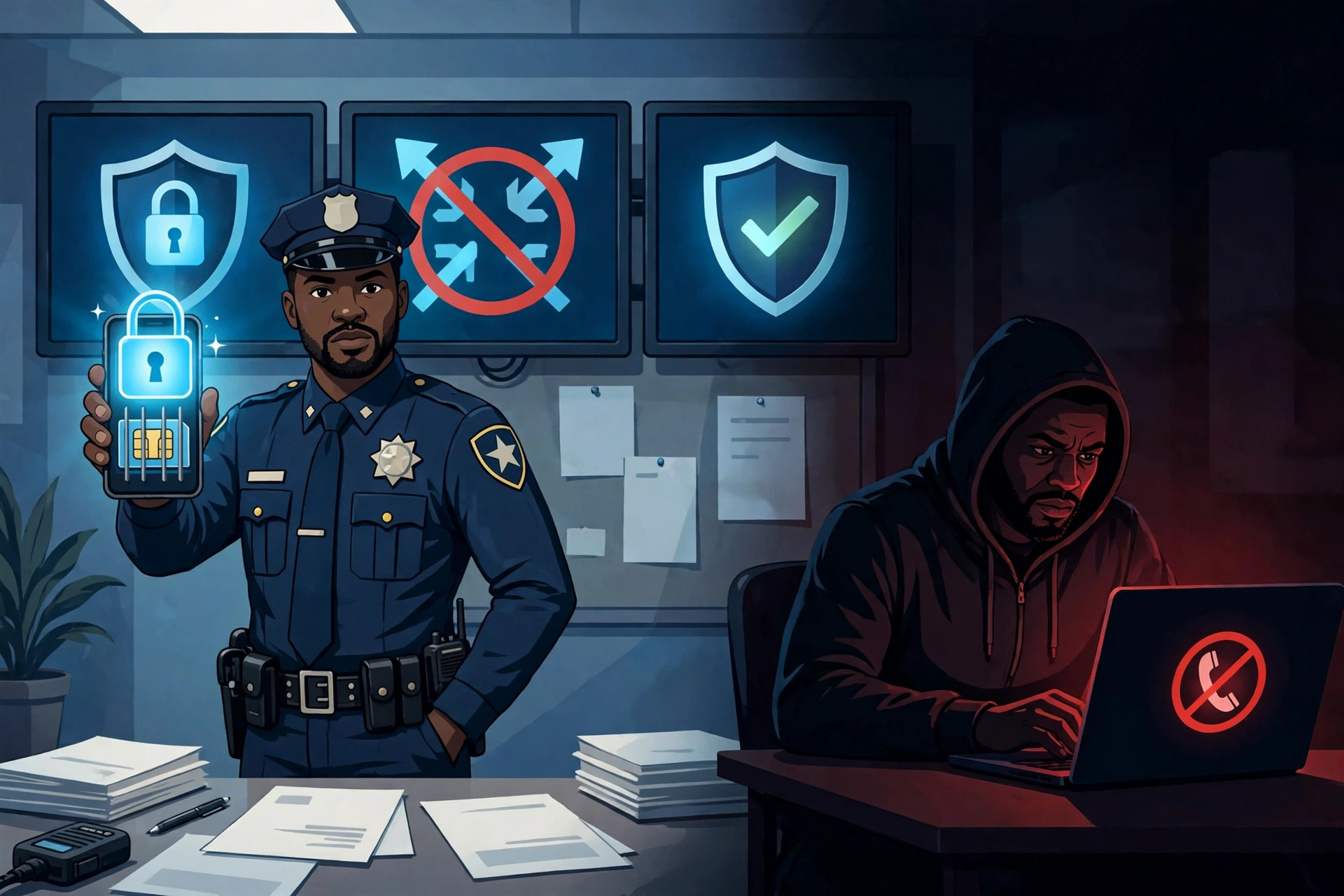
Your phone does not get hacked in this one. It gets reassigned. Learning how to prevent SIM swap attack tactics starts with a plain fact: a criminal talks your carrier into moving your number onto a phone they hold, and every call and text meant for you — bank codes included — lands with them instead.
The Federal Trade Commission lays out the usual script. The scammer calls your provider, says your phone was lost or damaged, and asks for a new SIM tied to your number to be activated on a phone they own. If the story lands, your phone goes quiet and theirs lights up.
How to prevent SIM swap attack moves at the carrier
The swap is a carrier action, so the first locks sit on the carrier account. Three settings do the heavy lifting, and they are not the same setting.
Set a PIN or password on the cellular account itself. The FTC recommends exactly this: a PIN or password on the account can help block unauthorized changes, and you set it through your provider. Pick one that is not your birthday, your address, or any part of your number, and store it in your password manager. CISA gives the same advice — set a telco PIN, then add multi-factor sign-in to the carrier account on top of it.
Turn on the SIM-change lock if your carrier offers one. Carriers sell it under different names — SIM Protection is one — and it blocks your number from being moved to a new SIM or eSIM until you lift the lock yourself.
Turn on the port-out lock too. A SIM swap keeps your number at the same carrier on a new SIM. Port-out fraud is the cousin: posing as you, a scammer opens an account at a different carrier and has your number transferred there, the Federal Communications Commission explains. One lock does not cover the other move, so ask for both by name.
In November 2023 the FCC adopted rules aimed at this fraud — secure checks before a SIM change or port-out, prompt notice to the customer, and a no-cost option to lock an account against both moves. Parts of that package have moved through federal paperwork review since then, so do not assume a lock is already on. Ask your carrier what it offers today and switch it on yourself. That is the core of SIM swap protection: the tools exist, but they ship turned off.
SIM swap warning signs: the phone goes dark first
Know the SIM swap warning signs cold, because the first one is easy to shrug off as a dead zone.
Your phone suddenly shows no service — no calls, no texts, no data — in a place where it normally works. The FTC names that as a lead sign. A second sign follows fast: a notice from your provider that your SIM was activated on a new device, when you asked for no such thing. Then come the tremors — password reset emails you did not request, login alerts at odd hours.
One sign alone can be a glitch. No service plus a SIM notice is not. Treat that pair as an alarm and move to the recovery steps below, from another phone.
The money explains the urgency. The FBI's Internet Crime Complaint Center counted 982 SIM swap complaints in 2024, with about $26 million in reported losses — and that count only covers people who filed.
Move the codes off your number
A swapped number pays out through texted codes. Break that link and the stolen number buys far less.
The FTC is direct here: text message verification may not stop a SIM card swap, because the code goes to whoever holds the number. For accounts with sensitive personal or financial information, use an authenticator app or a security key instead. CISA pushes the same direction — move away from SMS as a second factor, and use FIDO authentication, which covers passkeys and security keys, where you can.
Work in this order: email first, since email resets almost everything else; then bank and payment apps; then social accounts. This patrol's guide to how to set up two-factor authentication walks that order step by step. Keep each service's backup codes printed or saved offline.
How to protect your phone number day to day
How to protect your phone number is mostly a matter of starving the impersonation. A swap request lives or dies on the details a scammer can hand a carrier agent: full name, address, date of birth, the last digits of an ID number. The FTC tells people to limit the personal information shared online and to avoid posting a full name, address, or phone number on public sites, where a thief can lift it to answer verification questions.
Refuse the other door too. Do not reply to calls, emails, or texts that ask for personal information, and never read out a code or a PIN to someone who contacted you. If a request claims to be your carrier or your bank, hang up and contact the company through a number or site you already know is real.
If the swap already happened
Speed beats paperwork here. Contact your provider right away — from another phone if yours is dead — and take back control of the number, the FTC says. Once it is yours again, change your passwords, starting with email, then check bank and card accounts for charges or changes you do not recognize and report what you find. If an ID, card, or bank account number may be exposed, IdentityTheft.gov lays out the next steps, and a report can also go to the FBI's IC3.
Then close the hole behind you: carrier PIN set, both locks on, key accounts moved off text codes. A swap that worked once gets tried again.
Your number is an ID now, whether anyone asked your permission or not. Lock it like one. If a tether has already worked your name, your number, or your family with a scam like this, put the story in front of this patrol through report a tether. The officer's beat is set out on the About page. Patrolling the online borders, one tether at a time.
Sources and further reading (checked 16 November 2026): Federal Trade Commission — SIM Swap Scams: How to Protect Yourself · Federal Communications Commission — Cell Phone Fraud · CISA — Mobile Communications Best Practice Guidance · FBI Internet Crime Complaint Center — 2024 Internet Crime Report
Tags: how to prevent SIM swap attack · SIM swap warning signs · how to protect your phone number · SIM swap protection