
Black Church Culture: More Than a Sermon, the Institution Black Americans Built
Listen to this article
Press play and take the patrol report with you.
Or listen in another language / choose a voice
Getting your device voices ready…
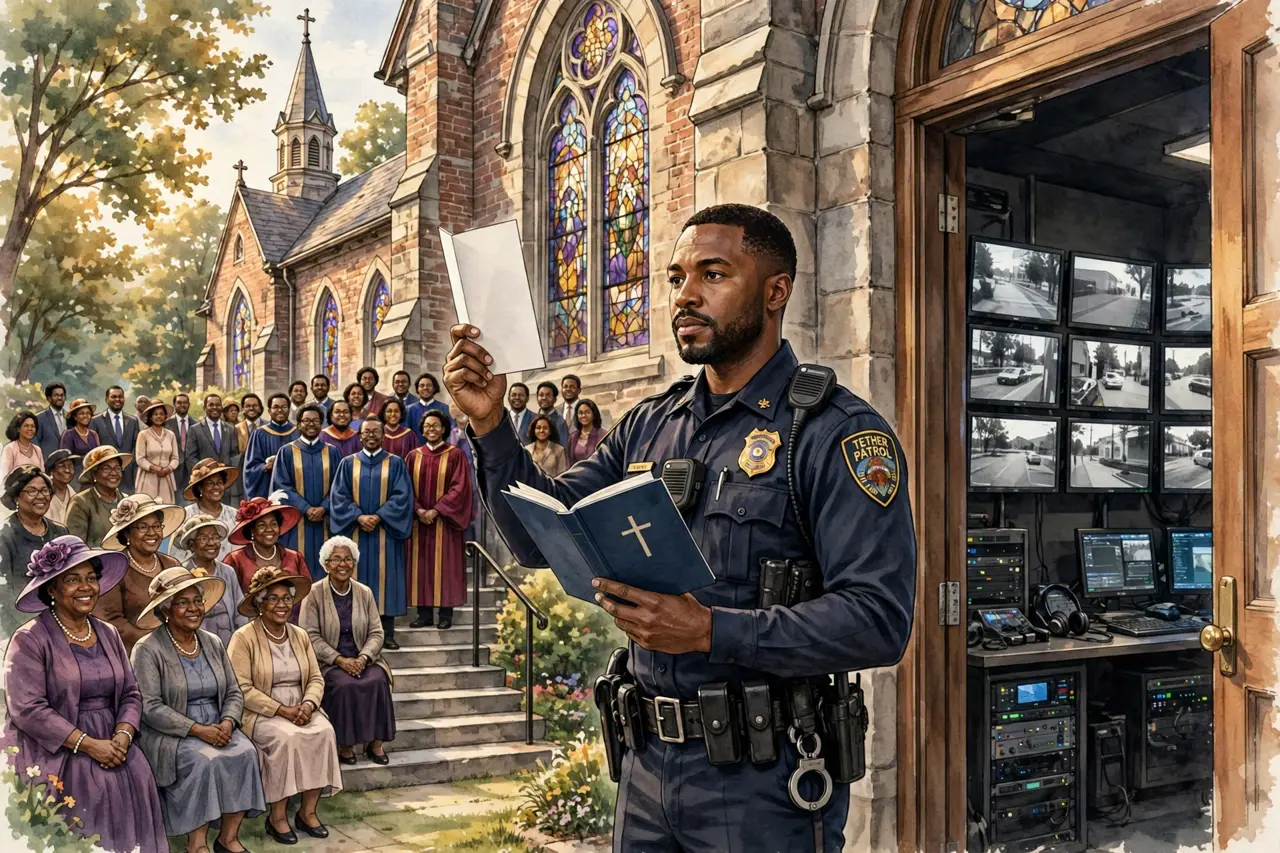
Sunday morning starts before the sermon. Ushers at the door. A choir finding its key. Somebody's grandmother in a hat that took planning. Black church culture is that whole room — the worship, yes, and the announcements, the sick-and-shut-in list, the dinner after service, the business being handled in the parking lot. The pulpit is the centre. It was never the whole building.
What is Black church culture?
Call Black church culture the habits of an institution Black Americans created and controlled on this soil: a congregation that owns its building, picks its pastor, buries its dead, feeds its neighbours, and keeps its own records. Henry Louis Gates Jr. calls these churches, taken together, the oldest institution created and controlled by Black Americans — a foundation for religious, political, economic and social life at once. There is no single Black Church. There are thousands of congregations across Baptist, Methodist and Pentecostal traditions sharing a history and a way of doing the work.
That history has a starting fight. In 1787 in Philadelphia, Richard Allen and Absalom Jones led Black worshippers out of St. George's Methodist Episcopal Church after they were pulled from their knees in prayer for sitting in seats reserved for whites. Allen and Jones built the Free African Society, a mutual aid society for Black Philadelphians. Jones went on to lead St. Thomas African Episcopal Church. Allen stayed Methodist, opened Mother Bethel in a former blacksmith's shop in 1794, and in 1816 gathered delegates from fifteen other Black Methodist churches to form the African Methodist Episcopal Church — the first independent Black denomination in the United States, with Allen as its first bishop. Yale Divinity School calls Mother Bethel's formal organisation the first independent Black institution in the country.
Before and beside those public churches ran a quieter one. Enslaved Black Americans in the South worshipped in secret gatherings in woods and secluded places — hush harbors, the invisible institution — where preaching, prayer and spirituals could happen away from an overseer's ear. The spirituals came out of that ground: Bible stories retold by a people reading Exodus as their own address.
Black church traditions you can hear from the sidewalk
The Black church traditions are not decoration on the service. They are the service.
Call-and-response is the engine: the preacher puts a line out, the congregation answers it back, and the sermon becomes a conversation instead of a lecture. Black preaching builds on rhythm and repetition, rising and settling, with the choir and the organ answering in the gaps. Gates traces that same pattern out of the pews and into American music — spirituals becoming gospel, gospel shaping soul, jazz and R&B, singers trained in church choirs carrying the sound everywhere.
Watch Night carries a date with it. Congregations gather on New Year's Eve, a Methodist practice Black churches made their own. On 31 December 1862, enslaved and free Black Americans stayed up through the night waiting for the Emancipation Proclamation to take effect at midnight — Freedom's Eve. Watch Night has held both meanings ever since: watch for the year, watch for freedom.
Add the rest of the furniture: church anniversaries that run a week, homecoming Sundays that pull former members back from three states away, repasts after funerals where the family eats and the record of a life gets told out loud. That homecoming pull is the same built return this patrol traced in the Black family reunion tradition — people travelling on purpose to a room that is theirs.
The church that did every other job too
Segregation closed doors, so the Black church community built its own behind the church door. Churches ran schools when the county would not, mutual aid societies that paid for burials and sickness, credit and employment networks, and meeting halls no landlord could lock them out of. During Reconstruction, congregations taught newly enfranchised men the obligations of citizenship; between 1868 and 1876, more than 2,000 Black Americans held public office across the South, and the church was the organising ground under much of that rise.
That civic load never really left. The civil rights movement met in sanctuaries, raised its money in offering plates, and took much of its leadership and its language from pulpits. The pattern matches the other room this patrol has profiled: Black barbershop culture, where a Black-owned business doubled as a newsroom and a debating hall. The barbershop held the talk on Saturday. The church held the vote, the school and the funeral fund on Sunday.
What the patrol watches now
The building has an online twin now — livestreamed services, giving apps, a pastor's page with fifty thousand followers. The cracks are the ones this beat knows: a copied church page collecting "building fund" donations into a stranger's cash app, a fake livestream link under a real sermon harvesting card numbers, a cloned pastor account messaging members for gift cards. Give through the channel the church itself announced from its own pulpit, and check any new payment link against the church office before money moves. A page taking money in a real congregation's name belongs in front of this patrol through report a tether.
A sermon ends at noon. The institution has been running since 1794, because it never only did Sundays: it schooled children, buried grandparents, registered voters and kept a people's record when nobody else would keep it. The officer's beat is set out on the About page. Patrolling the online borders, one tether at a time.
Sources and further reading (checked 14 November 2026): Penguin Random House — An Excerpt From The Black Church, Henry Louis Gates Jr. · Yale Divinity School — African Methodist Episcopal · Nonprofit Quarterly — How Black Churches Built the Civic Infrastructure That Kept the Nation Alive · Wikipedia — Black church
Tags: black church culture · black church history · black church traditions · black church community