
Set a Family Code Word for Scams: The One Word a Cloned Voice Can't Say
Listen to this article
Press play and take the patrol report with you.
Or listen in another language / choose a voice
Getting your device voices ready…
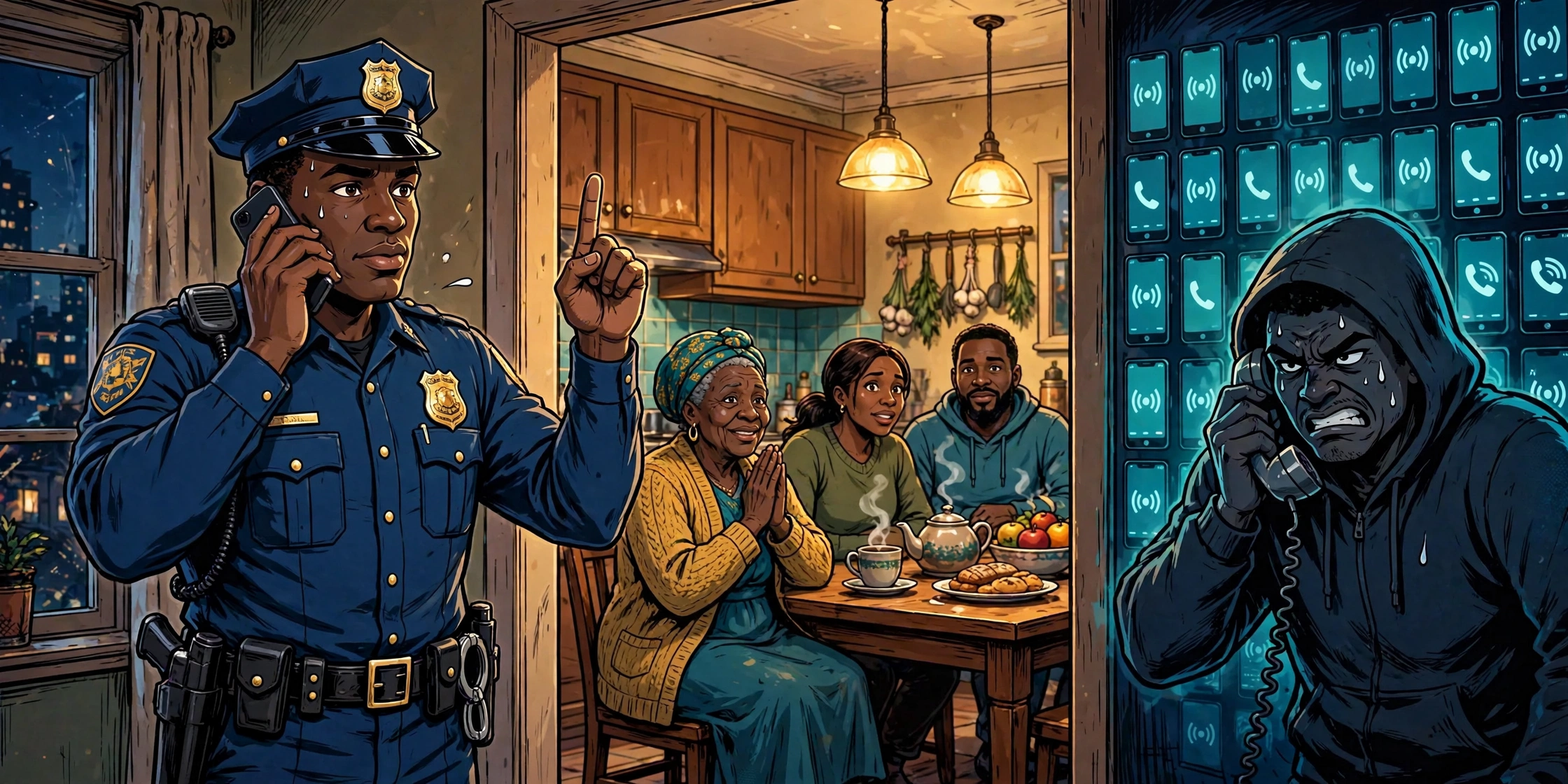
A family code word for scams is the cheapest security your household will ever set up. One word, agreed in advance, known only inside the family, and demanded out loud before anybody moves a dollar on an emergency call. A cloned voice can copy your grandson's laugh and the way he says your name. It cannot say a word it never heard — and that single gap is where this whole scam dies.
Set it before you need it. A code word picked calmly at the kitchen table works. One invented mid-panic does not.
The call that sounds exactly like family
The grandparent scam is old. A caller claims a grandchild is in trouble — a wreck, an arrest, a hospital bed — and needs money fast, and please, don't tell Mom and Dad. What changed is the voice doing the asking.
The Federal Trade Commission laid it out in a consumer alert on 20 March 2023: a scammer needs only a short audio clip of a family member's voice — the kind sitting in a birthday video online — plus a voice-cloning program. Then he calls, sounding just like your loved one. The FTC's instruction from that alert is four words long: don't trust the voice.
That is the AI voice cloning scam in one line. The family emergency scam script around it never changed — urgency, secrecy, a payment you can't take back. Only the disguise got better. Your ear was the lock on the door for a hundred years. It isn't anymore.
The scale is not small. In the FBI's 2025 reporting, Americans aged 60 and older reported $7.7 billion in fraud losses, up about 59 percent in a year; more than $352 million of the losses victims could tie to AI-enabled schemes came from that same group. And on 15 October 2026 the FBI's Internet Crime Complaint Center warned again that scammers generate highly realistic voices impersonating trusted contacts.
What a family code word for scams actually is
Strip it down and it's a password your family speaks instead of types. One word or short phrase, known by everybody who might get the call — or be impersonated on one: grandparents, parents, teenagers.
The rule rides with it, and the rule matters as much as the word: any call claiming a family emergency and asking for money gets one question first. What's the word? The real person answers without blinking. The clone stalls, guesses, or gets angry — and anger is an answer too.
Ask for it. Never offer it. "Is it blue canoe?" hands the scammer the keys. Let the caller produce the word on his own, the way you'd let a man at the door produce his own credentials.
Pick a word a screen can't hand them
Good code words share one trait: they exist nowhere a scraper can reach. Not a pet's name — it's in a caption somewhere. Not a birthday, a street, a school. Anything posted or said in a public video is already in the tether's notebook.
What works is something odd and unrelated, easy to say under stress: two plain words that don't belong together, or a joke so old only your people remember why it's funny. Pick it together, say it out loud once, then keep it spoken-only. Not in the family group chat. Not in a text thread. Not in an email.
Bring the grandparents in person, or on a call you placed to a number you already have. The grandparent scam aims at them first; a word they half-heard in a forwarded message won't hold at midnight. If the word ever leaks — a kid repeats it in a video, a guest overhears it — change it that week. A burned code word is worse than none: it still feels like protection.
When the call comes: ask, hang up, call back
The word is the first check, not the only one:
- Ask for the word. No word, the conversation is over.
- Hang up and call back on the number saved in your phone — never the number that just called you, and never one the caller supplies. Caller ID can wear a familiar number like a mask.
- If they don't answer, call another relative. A parent, a sibling, a roommate, the school. The scam needs you alone inside its story. A second voice from your own family breaks it.
- Read the payment demand. Wire transfer, cryptocurrency, gift cards and their PINs, cash handed to a courier — the FTC names those as scam signs outright, the same tells that run through every fake giveaway scam this patrol has filed. Bail does not get paid in gift cards.
And if somebody in your family already sent money on one of these calls, they were not careless. The call is engineered to hit love first and thinking second — shame is part of the weapon. Call the bank fast, then report it. Speed is the only lever left, and it does sometimes work.
The law is behind you. The plan is still yours.
On 8 February 2024 the Federal Communications Commission released a declaratory ruling (FCC 24-17) holding that AI-generated voices count as "artificial" under the Telephone Consumer Protection Act — voice cloning in robocalls is illegal without the called party's prior consent, and state attorneys general can go after the people behind the calls.
The law gives prosecutors a tool after the call. It does not sit in your grandmother's kitchen when the phone rings. Your family does. The code word, the call-back habit, the refusal to move money under pressure — that is community digital safety in its plainest form.
So do it this week, while Halloween costumes are still hanging by the door — the one season everybody admits a mask can fool you. Pick the word. Say the rule out loud: no word, no money. The officer's beat is written up on the About page, and if a cloned voice has already called your house, report a tether with the number and the story it told. The voice on the next call may be perfect. The word will still be yours.
Sources and further reading (checked 27 October 2026): FTC — Scammers use AI to enhance their family emergency schemes (20 March 2023) · FBI IC3 — Scammers Exploit 2026 U.S. Midterm Election to Perpetrate Multiple Fraud Schemes (PSA, 15 October 2026) · FCC — Declaratory Ruling FCC 24-17 (released 8 February 2024) · Medical Alert — AI Voice Scams Targeting Seniors and How to Stay Safe · Clark.com — Why Every Family Needs a Code Word
Tags: family code word for scams · AI voice cloning scam · grandparent scam · family emergency scam