
HBCU Homecoming Culture: More Than a Game
Listen to this article
Press play and take the patrol report with you.
Or listen in another language / choose a voice
Getting your device voices ready…
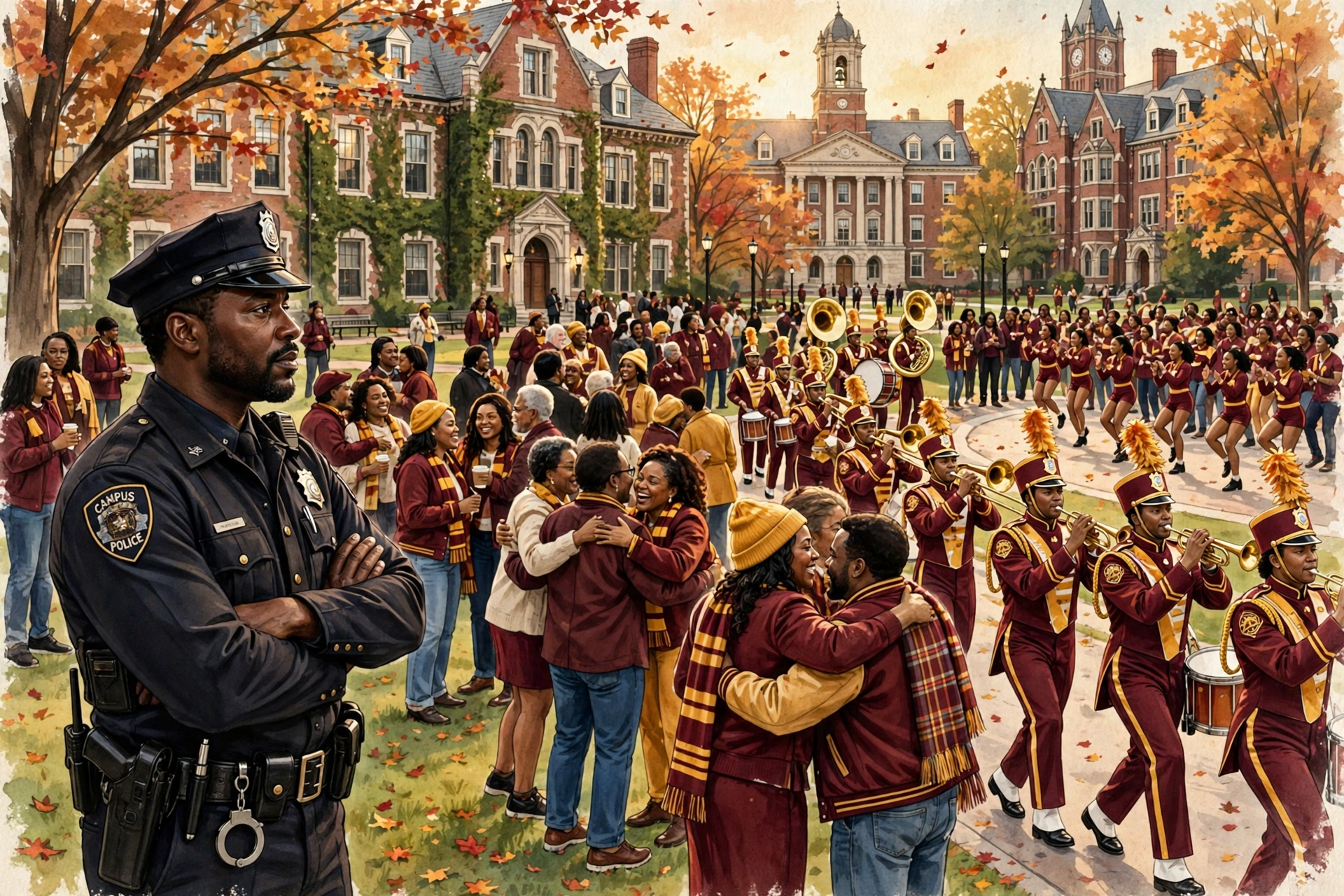
Ask somebody who went to a Black college what homecoming means and watch the answer outgrow the football schedule fast. HBCU homecoming culture is a week built by Black Americans on their own campuses: alumni flying home from every corner of the country, bands rehearsing like the halftime show is the main event — because often it is — and a yard full of people who graduated thirty years apart and still speak the same language on sight.
What is HBCU homecoming?
Start with the plain answer to what is HBCU homecoming: an annual return. Alumni come back to the school that made them, current students get to see what their degree can turn into, and the town around the campus gets pulled into the orbit for a week of parades, concerts, step shows, tailgates, class reunions and church clothes next to school colors.
Historian Marybeth Gasman, quoted in coverage of Morgan State's homecoming, puts the difference plainly: HBCUs include the football and tailgating any college offers, then go past them — concerts, fashion shows, step shows, parades, service projects, Black-owned vendors and caterers. Homecoming celebrates the diversity of Black culture around each school, not one flat version of it.
Every campus guards its own flavor. North Carolina A&T calls its week the Greatest Homecoming on Earth. Morehouse and Spelman share SpelHouse. Howard takes over blocks of Washington, D.C. The rituals rhyme; the schools do not copy each other.
Howard University homecoming 1924 set the pattern
The documented starting point most histories return to is Howard University homecoming 1924. Howard and Lincoln had been playing a Thanksgiving football rivalry since 1893, a game so big that Howard's student paper called it the athletic and social event for Black Americans in the country. The money, though, was flowing to outside businesses, not to the schools.
So Howard's alumni organised a homecoming around the classic that year: alumni association sessions, receptions, a bonfire, and a game at Griffith Stadium that drew an estimated 30,000 people. Lincoln won 31–0. Howard's fans stayed anyway, followed the band out of the stadium and sang the school song into the street. Lose the game, keep the people — that turned out to be a durable formula.
Two details from 1924 read like a blueprint for everything after. Fashion was already serious business; the student paper described attendees in full splendor. And fraternities filled the Friday with entertainment, an early version of the step-show slot that now anchors homecoming week. A Hilltop editorial told the returning graduates they were "making traditions that will live as long as Howard lives." A century on, that prediction is holding.
The Smithsonian's National Museum of African American History and Culture treats autumn as HBCU homecoming season outright, and launched a digital experience in 2022 chronicling the phenomenon, with Howard's event featured prominently. A campus party does not usually earn that kind of record-keeping. This one documents how Black Americans built institutions, then built a way to come back to them every year.
HBCU homecoming traditions carry the culture
Run down the HBCU homecoming traditions and each one carries a job:
- The marching band. High-stepping, dance lines, popular songs cut into precision drill. At plenty of schools the band is the draw people plan their Saturday around, and the halftime show gets argued over longer than the score.
- Step shows and strolling. Black Greek-letter organisations perform synchronised rhythm built on voice, hands and feet. It is competition, memory and organisational pride in one act — teams rehearse for months for a few minutes on stage.
- The homecoming court. Pageants arrived in the 1950s, and the crown was never just a beauty title. Former Miss Tennessee State Dale Williams has described the role as a position — judged on academics, volunteer work and community outreach, a campus representative for the year.
- The yard and Yardfest. Howard's Yardfest turned the campus green into an open-air concert and reunion ground where students, alumni and neighbours all mix.
- Food, vendors and giving back. Tailgates run on family recipes. Black-owned businesses set up as vendors. Alumni write cheques, mentor students and recruit the next class on the spot. Celebration and reinvestment share the same tent.
None of this was imported whole from somewhere else. Black Americans took a college ritual that schools like Yale and Harvard had used to court alumni, then rebuilt it in their own image — their music, their organisations, their standards of presentation, their economics. That is ethnogenesis you can watch on a Saturday: a people formed in this country, expressing a culture formed in this country. It connects straight to the lineage this patrol stands on — the Foundational Black Americans whose work built these schools and whose descendants fill the yard now.
Why the patrol pays attention
Tether Patrol's beat is screens, and homecoming week floods them: band clips, step-show footage, fashion breakdowns, reunion photos going back decades. Most of it is exactly what it looks like — Black joy, documented by the people living it.
Some of it is not. Big cultural moments pull in the tethers: fake ticket sellers, counterfeit merchandise, bogus vendor pages and prize pitches dressed in school colors. The patrol's reminder every October: buy tickets and merchandise through the school, check a seller's history before money moves, and if a page is harvesting payments in a school's name, report a tether with the link and the screenshots.
That is a small shadow on a big week. Homecoming has survived a hundred autumns because it hands students a picture of their own future: alumni in school jackets, running businesses, bringing their kids back to the yard. Howard's first crowd could not have known the score would be forgotten and the singing remembered. Anyone who has stood in that crowd since knows how it happened.
Sources and further reading (checked 25 October 2026): Howard University, The Dig — The First Howard University Homecoming (9 October 2024) · Smithsonian / NMAAHC — Afrofuturism and HBCUs Highlight October Programming (10 October 2023) · A Magazine — Tradition and Triumph: The History of HBCU Homecoming Celebrations · The Chronicle News — More Than a Game: Why HBCU Homecoming Still Feels Like a Family Reunion (2 October 2026)
Tags: HBCU homecoming culture · HBCU homecoming traditions · what is HBCU homecoming · Howard University homecoming 1924